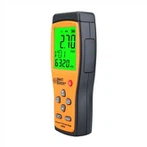
How to choose an infrared thermometer?
At present, there are many infrared thermometer products on the market, which makes us a bit confused. So how to choose an infrared thermometer correctly and accurately? When choosing, it is important to meet practical needs while minimizing costs, while ensuring performance and quality. Based on experience, Beijing Ocean Xingye Technology Co., Ltd. believes that selecting a suitable infrared thermometer should start from the following aspects: firstly, it is necessary to determine the measurement target requirements, considering the temperature and size of the measured target, the measurement distance, the material of the measured target, and the environment in which the target is located; Secondly, it is necessary to consider the response speed, measurement accuracy, and whether the instrument is used on-site or for online monitoring; Then choose the performance, functionality, and price of the infrared thermometer to become the best combination; Finally, appropriate consideration should also be given to quality assurance and service issues such as ease of use, brand, maintenance, and calibration. These requirements are as follows:
1. Measurement temperature range: The temperature measurement range is the most important performance indicator of an infrared thermometer. Each model of thermometer has its own specific temperature measurement range. It is recommended that you choose an appropriate range of infrared thermometer according to your measurement needs. The temperature range to be measured must be considered accurately and comprehensively, neither too narrow nor too wide. If the temperature range is too wide, it will reduce the accuracy of temperature measurement, and if the temperature is too high, the price will be expensive, which is not cost-effective economically; The temperature is too low to meet the requirements. According to the blackbody radiation law, the change in radiation energy caused by temperature in the short band of the spectrum will exceed the change in radiation energy caused by emissivity error. Therefore, short waves should be used as much as possible for temperature measurement. Generally speaking, the narrower the temperature measurement range, the higher the resolution of the output signal for monitoring temperature, and the easier it is to solve the problem of accuracy and reliability.
2. Measurement accuracy and minimum resolution: Measurement accuracy and resolution are two different concepts that can be easily confused. Measurement accuracy is the only indicator to ensure the accuracy of measurement, and it is also a key indicator to determine the performance of infrared thermometers. Resolution is the minimum measure used to measure a specific temperature.
3. Emissivity: According to customer feedback, measurement deviations often occur when using infrared thermometers, with emissivity being the main cause of errors in 50% of cases. Due to the fact that infrared thermometers are suitable for various occasions, the material and color of the surface of the object being measured are different (especially for various pipelines in HVAC systems), and their ability to emit infrared energy to the outside world is also different. By adjusting the emissivity, measurement errors caused by materials can be reduced. So whether the instrument has this function is crucial (see the article "Introduction to the Application of Infrared Thermometers in Marine Instruments" for details).