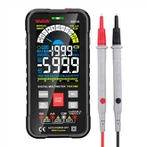
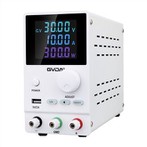
How to correctly use the multimeter to measure?
The function of the multimeter DC current measurement: insert the red test lead into the jack with "+", and insert the black test lead into the jack with "-". . Turn the conversion puller knob to the required range in the current function block, and connect the test leads in series in the circuit to be tested in the correct direction.
AC and DC voltage measurement: Insert the test leads in the same way as above, turn the switch dial knob to the desired position, and connect the two ends of the test leads to the two ends of the voltage to be measured.
Resistance measurement: insert the test leads in the same way as above, adjust the switch knob to electric resistance, first short-circuit the two test leads, the pointer deflects to the full scale, and gently adjust the "Ω zero potentiometer" adjustment knob to make the pointer point to zero ohms, then Touch the two ends of the test lead with the two ends of the resistance to be measured.
Correct use of the multimeter: Only the correct use of the multimeter can ensure the accuracy of the measurement results without damaging the meter. Attention should be paid when using: Before each measurement, the multimeter should be placed horizontally, and observe whether the pointer points to zero. The red and black test leads should be correctly inserted into the jack of the multimeter. The rotary puller knob should be placed on the range block of the electrical parameter to be measured, and must not be misplaced.
If you do not know the approximate range of the measured voltage and current values, you should first use the maximum voltage range and maximum current range on the meter to predict, and then use an appropriate range for measurement.
If you don't know the positive and negative polarity of the circuit under test, you can put the conversion puller knob on the highest gear, touch the circuit under test lightly with the test pen when measuring, and observe the deflection direction of the pointer at the same time, so as to determine the positive and negative poles of the circuit . If you don’t know whether the voltage to be measured is AC or DC voltage, you can first estimate it with the highest level of AC voltage to get the approximate range of the voltage, and then measure it with a DC voltage level with an appropriate range. Deflection, it is concluded that the voltage is an AC voltage, and if there is a reading, it is a DC voltage. When measuring current and voltage, the correct range should make the pointer on the meter head indicate a position greater than half of the range, and the error of the result obtained at this time is small.
When measuring voltage, pay more attention to the position of the switch knob, and never put it on the current or electric barrier. Otherwise, the meter head will be damaged, and the hands of the meter will be bent if it is light, and the circuit components of the multimeter or the hairspring and deflection coil will be burned if it is serious. When measuring high-value resistance, do not touch the two ends of the resistance with both hands, so as not to connect the resistance of the human body in parallel to the resistance to be measured.
When measuring the resistance installed on the instrument, the power of the instrument should be turned off, and one end of the resistance should be welded away from the circuit before measurement. If there is a capacitor with a large capacity in the part of the circuit to be tested, the capacitor should be discharged before measurement.
When measuring resistance, the zero-ohm knob must be readjusted every time the range is changed. If it is found that adjusting the zero ohm knob can not make the pointer point to zero ohm, the knob should not be twisted hard, but a new battery should be replaced. When reading, observe the pointer vertically with both eyes, and should not squint.
When saving the multimeter, put the changeover dial knob at the highest gear for AC current and voltage. The battery should be removed from the watch when not in use for a long time. The multimeter should be placed in a dry, ventilated and clean environment.
Digital Multimeter
A multimeter that uses digital display to measure the value of electrical parameters is called a digital multimeter. Its measurement principle is completely different from that of an analog multimeter, so its structure and usage are also different. It has high sensitivity and accuracy, clear and intuitive display, stable performance, strong overload capacity and easy to carry. How to use: Although the digital multimeter adopts overvoltage protection and overcurrent protection, it is still necessary to prevent operational errors (such as measuring voltage with current block or electric block). Before measuring, carefully check whether the position of the range switch meets the requirements. Pay attention during use; Do not place the digital multimeter in a high temperature (>40°C), high temperature (relative humidity>80%), or cold (<0°C) environment, so as not to damage the LCD display.
It is strictly forbidden to pull the range switch during measurement (voltage > 220V, current > 0.5A) to prevent arcing.
Do not use batteries or multimeter resistance to check whether the LCD is good or bad.
Do not open the back cover of the multimeter or disassemble the components at will. There is aluminum sprayed paper on the inside of the cover, do not take it off, and do not break the "com" connection under it.