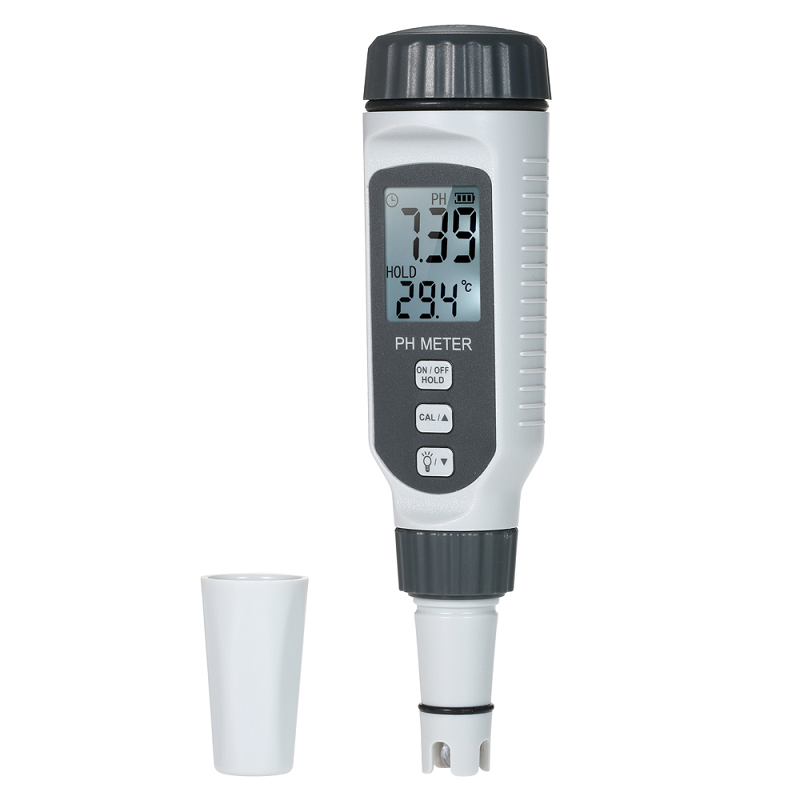
How to identify acidity meter failure?
1. Check the instrument function
(1) Check whether the pH meter display shows a degree. If it does not display a degree, check whether the power supply is normal. The inspection of Sartorius PB-10 is as follows: If the input signal exceeds the measurement range, the instrument will display————. At this time check that the electrode is immersed in the solution. If it is determined that there is a problem with the electrode response, the instrument displays Error. This error will also be displayed when the motor's efficiency is less than 90% or greater than 105% during calibration, so displaying Error indicates a problem with the electrode or buffer.
2) Switch the meter to mv mode, use a shorts plug to insert into the PH input port to check the potential. The Mettler pH meter reads 0±2mv, and the Sartorius pH meter reads 0±0.3mv.
(3) Use a PH simulator and check the potential when the PH is 4.01/7.00/9.21, and approximately get three corresponding values of +180mv, 0mv and -130mv.
2. Check the electrode function and use
(1) At room temperature, measure the potential of buffers 4.01 and 7.00. should get 180mv±30mv and 0mv±30mv respectively
(2) If there is an ATC, measure the temperature of the ice water and the displayed reading is 0±1°C. If the signal does not change, there is something wrong with the temperature probe.
(3) Replace the cable and repeat the above steps. If 1&2 is successful, there is a problem with the cable. If 1 is not successful, there is a problem with the electrode or cable.
3. Check electrode performance
(1) Calibrate the electrode according to the instrument operation manual. The zero point and slope values obtained should meet the technical specifications of the electrode. Zero point: 0mv±30mv, slope: 95%-100% at 25℃
(2) Check the response time of the electrode, immerse the electrode in another pH buffer and stir, check the potential of the electrode after 30 seconds, the change should not exceed 2mv in the next 30 seconds.