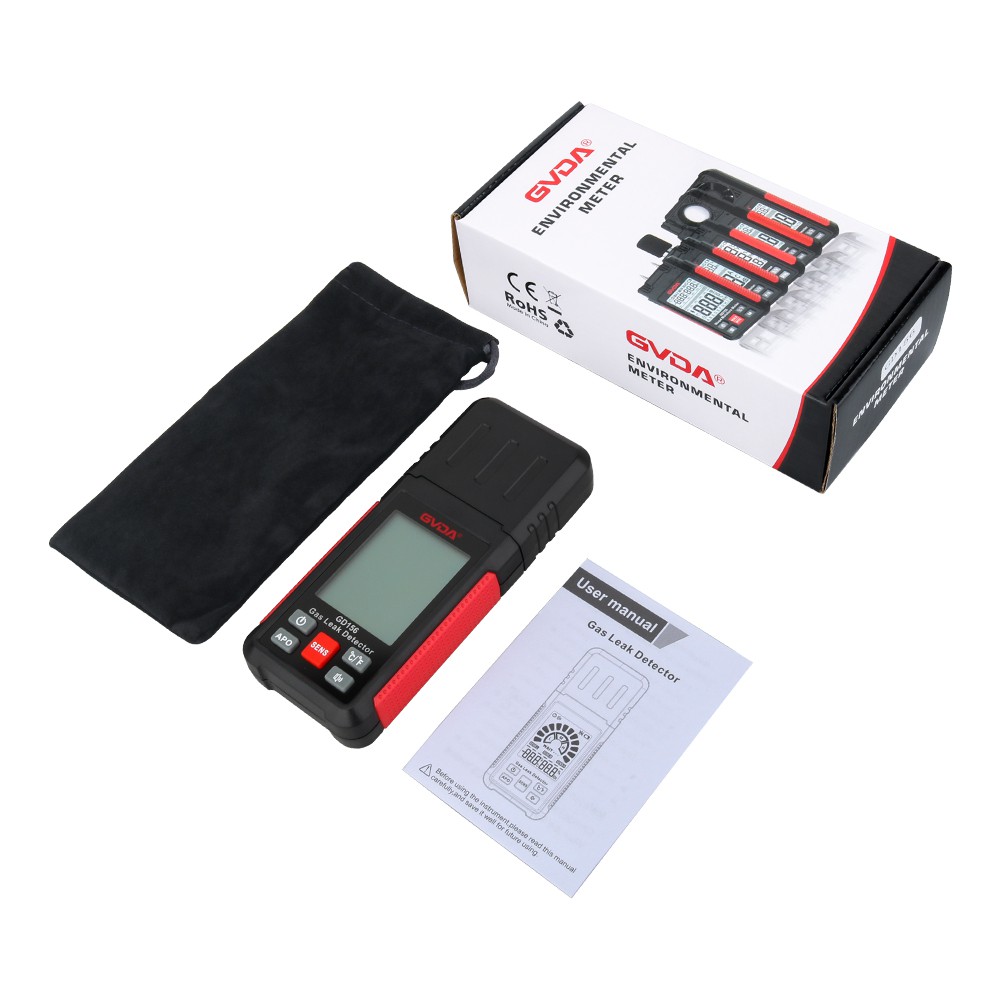
How to Improve the Accuracy of a Gas Detector?
1, Choose high-performance sensors
Choose an appropriate sensor: The gas detector should select the appropriate sensor based on the type of gas being detected, as different sensors may have different detection accuracies for different gases. High performance sensors should have characteristics such as high sensitivity, good selectivity, and strong stability.
Consider sensor lifespan: Gas detectors should choose sensors with a longer lifespan to reduce accuracy degradation caused by sensor aging.
2, Optimize environmental conditions
Control temperature and humidity: Gas sensors are highly sensitive to environmental temperature and humidity, so it is important to ensure that the gas detector operates under suitable temperature and humidity conditions. Usually, the temperature range should be controlled between -20 ° C and 55 ° C, and the humidity range should be between 15% RH and 90% RH (suitable humidity is 60% RH at 20 ° C). Temperature and humidity compensation can be used to reduce the impact of temperature and humidity on measurement results.
Manage gas pressure: Ensure that the gas measured by the gas detector sensor is blown parallel to the top surface of the sensor, rather than perpendicular to the top surface of the sensor, and ensure that the pressure inside and outside the gas chamber is the same to avoid pressure changes affecting the measurement results.
Reduce electromagnetic interference: Avoid using gas detectors in environments with strong electromagnetic interference to avoid affecting their normal operation and detection accuracy.
3, Correct installation and operation
Correct installation: Choose the correct installation location and avoid installing in areas with poor ventilation or interference. Ensure that the gas detector can fully contact the measured gas while avoiding interference with the gas.
Standardized operation: Use the gas detector correctly according to the operation manual or the manufacturer's guidance. Follow the correct operating steps and precautions, such as preheating, testing methods, sampling methods, etc., to avoid errors caused by improper operation.
4, Regular calibration and maintenance
Regular calibration: Strictly follow the time intervals and methods specified by the gas detector manufacturer for calibration. Calibration should use standard gases to ensure that the readings of the gas detector match the standard values. Regular calibration can ensure that the sensitivity and accuracy of sensors remain at a high level.
Maintain the sensor: Regularly clean the surface of the sensor, remove impurities such as dust and grease, and maintain the cleanliness and sensitivity of the sensor. At the same time, check whether the sensor is aging or damaged, and replace the damaged sensor in a timely manner. In addition, it is necessary to regularly clean the air inlet and other parts of the gas detector to prevent blockage and contamination.
5, Data Processing and Analysis
Choose appropriate statistical methods and calculation formulas: In the process of data processing and analysis, choose appropriate statistical methods and calculation formulas to ensure the accuracy and reliability of the results.
Record and analyze data: Record the results of each test and conduct detailed analysis. By comparing historical and current data, potential issues can be identified and timely measures can be taken to improve.