How to Improve the Efficiency of a Programmable DC Power Supply?
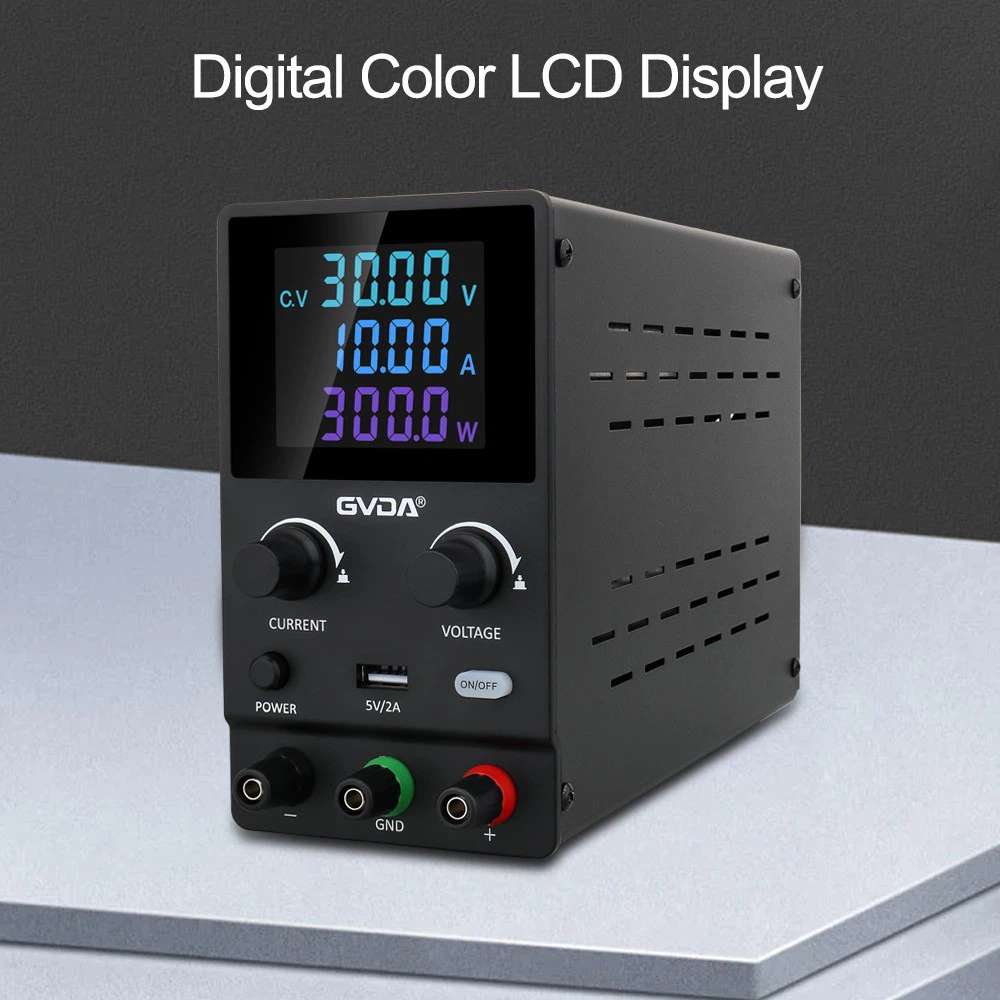
Programmable DC power supply is a type of power supply equipment that can accurately control the output voltage, current, and power through a microprocessor. It is widely used in fields such as laboratories, industrial automation, and communication equipment. There are many methods and technologies that can be applied to improve the efficiency of programmable DC power supplies. This article will provide a detailed introduction to some effective methods to help improve the efficiency of programmable DC power supplies.
1, Power factor correction technology
Power Factor Correction (PFC) technology is an important method for improving the efficiency of programmable DC power supplies. In traditional AC circuits, there is a displacement phenomenon between current and voltage, which means the power factor is low. This will lead to wastage of electrical energy, resulting in lower output power. By using power factor correction technology, the topology and control mode of the circuit can be changed to make the current and voltage in phase and close to a sine wave. This can maximize the utilization of electrical energy, improve power factor, and thus enhance the efficiency of programmable DC power supply.
2, Efficient Switching Power Supply Topology
Choosing an appropriate switching power supply topology is also an important factor in improving efficiency when designing programmable DC power supplies. The commonly used switching power supply topologies currently include single ended flyback, double ended flyback, half bridge, full bridge, etc. Among them, the half bridge and full bridge topologies have the characteristic of high efficiency. By designing power switching devices and output transformers reasonably, they can reduce switching losses and conduction losses, thereby improving the efficiency of programmable DC power supplies.
3, Efficient power switching device
Power switch tube devices are one of the key components in programmable DC power supplies. Traditional power switching devices such as transistors and switching transistors have significant switching and conduction losses, which limit the efficiency of power supplies. With the development of power semiconductor technology, some new power switching devices such as power MOSFETs, IGBTs, etc. are widely used in programmable DC power supplies. They have the characteristics of low conduction voltage drop, low switching loss, and high switching speed. The use of these efficient power switching devices can reduce the switching and conduction losses of the power supply, and improve the efficiency of the power supply.
4, Efficient conversion control technology
Conversion control technology is one of the key technologies for programmable DC power supply. The traditional PWM (Pulse Width Modulation) control technology has certain disadvantages, such as low adjustment accuracy and poor anti-interference ability. Nowadays, some advanced conversion control technologies such as resonant conversion technology and hybrid resonant conversion technology have higher efficiency and better performance. These technologies can minimize switching losses and conduction losses by controlling the switching time and current waveform of the switching tube devices, thereby improving the efficiency of the programmable DC power supply.
5, Reasonable heat dissipation design
High efficiency programmable DC power supplies generate a large amount of heat during operation, and the quality of heat dissipation directly affects the efficiency of the power supply. Reasonable heat dissipation design can effectively reduce the temperature of internal components of the power supply and improve the working efficiency of the components. A common heat dissipation design is to use radiators and fans for air cooling and heat dissipation. In addition, the layout of internal components and the selection of insulation materials in the power supply can also affect the heat dissipation effect. Therefore, when designing a programmable DC power supply, the issue of heat dissipation should be fully considered, and reasonable heat dissipation design measures should be taken to improve the efficiency of the power supply.