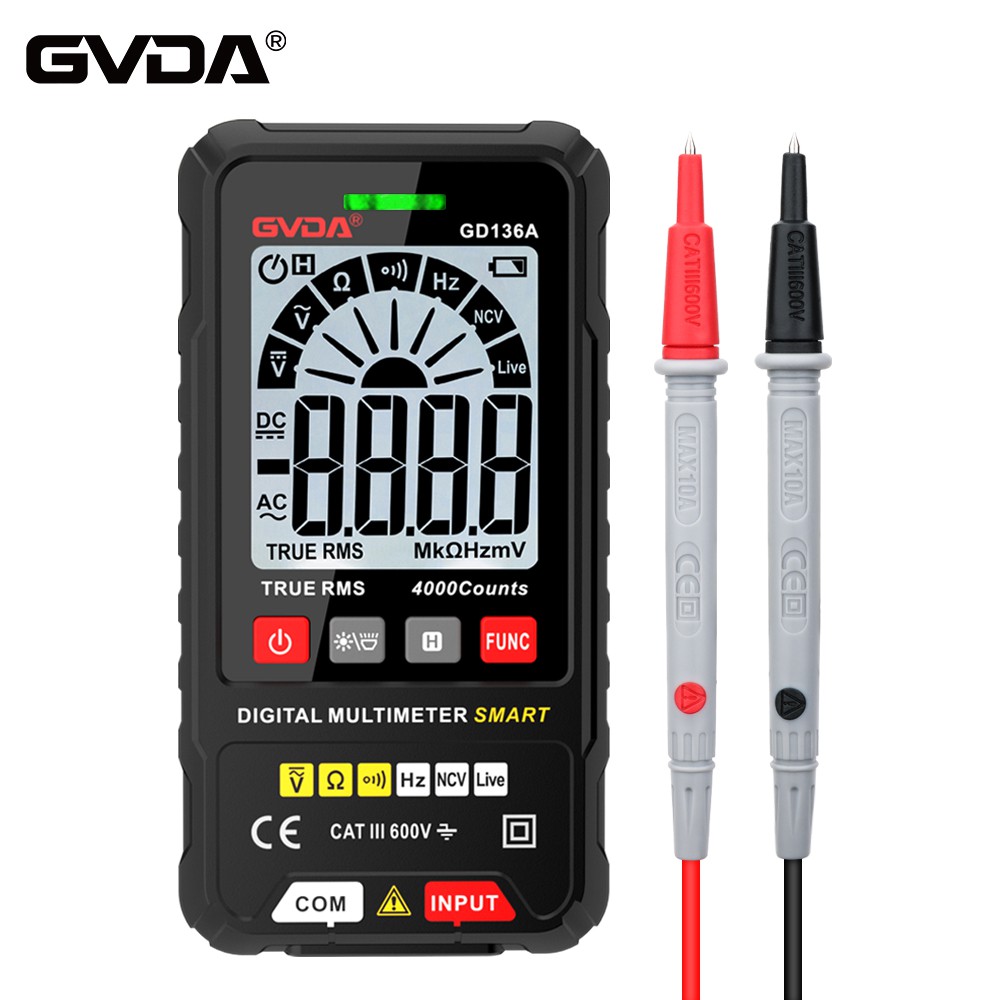
How to judge short circuit, open circuit and leakage with multimeter
The method of using a multimeter to determine short circuit, open circuit, and leakage is:
Short circuit: Disconnect the power supply, measure the resistance, and if the resistance is very small or even zero, it is a short circuit (metallic short circuit);
Open circuit: Disconnect the power supply, measure the resistance, and when the resistance is infinite, it is an open circuit (open circuit)
Leakage: Connect the power supply and measure the voltage of the casing to ground. When the voltage value is high, it is considered leakage; Measure the difference in current between the live and neutral wires, and if it is not zero, there will be leakage.
The above is the principle of using a multimeter to diagnose circuit faults, but there are some slight differences in actual circuit fault diagnosis.
Next, let's take a look at how to use a multimeter to determine circuit short circuits, open circuits, and leakage in actual circuits.
1: Summary
The following picture is my summary of the methods for checking short circuits, open circuits, and leakage with a multimeter, which can be saved for future use.
2: Use a multimeter to determine a short circuit (taking a 220V circuit as an example)
(1) Disconnect the power supply of the circuit.
(2) Cut off the circuit breakers of each branch of the circuit
Purpose: To eliminate the impact of branch roads on main roads.
(3) Measure the resistance between the live and neutral wires of the main circuit. If the resistance value is 0, a short circuit (metal Xing short circuit) has occurred in the main circuit.
Attention: After determining the presence of a short circuit in the main circuit, continue measuring the resistance between the wiring terminals of other devices on the main circuit. Identify the short-circuit points in sequence.
(4) Using the same method as the main circuit, check if there are any short-circuit points in each branch.
Attention: It is difficult to determine the short-circuit fault point of the circuit, but as long as we follow the circuit diagram,
Divide the circuit into small blocks based on the main and branch circuits, patiently measure the resistance value, and everything can be easily solved.
3: Multi meter to determine open circuit (taking 220V circuit as an example)
The judgment of circuit breaking can be based on the infinite resistance at the time of circuit breaking,
But when the circuit is complex, we can connect the power supply,
Then identify the points of abnormality (such as indicator lights not turning on or other devices working abnormally),
According to the circuit diagram, measure the ground voltage step by step.
When the ground voltage of a certain component is 0, it indicates that there is a circuit break before it, continue to search upwards.
Until the breaking point is determined.