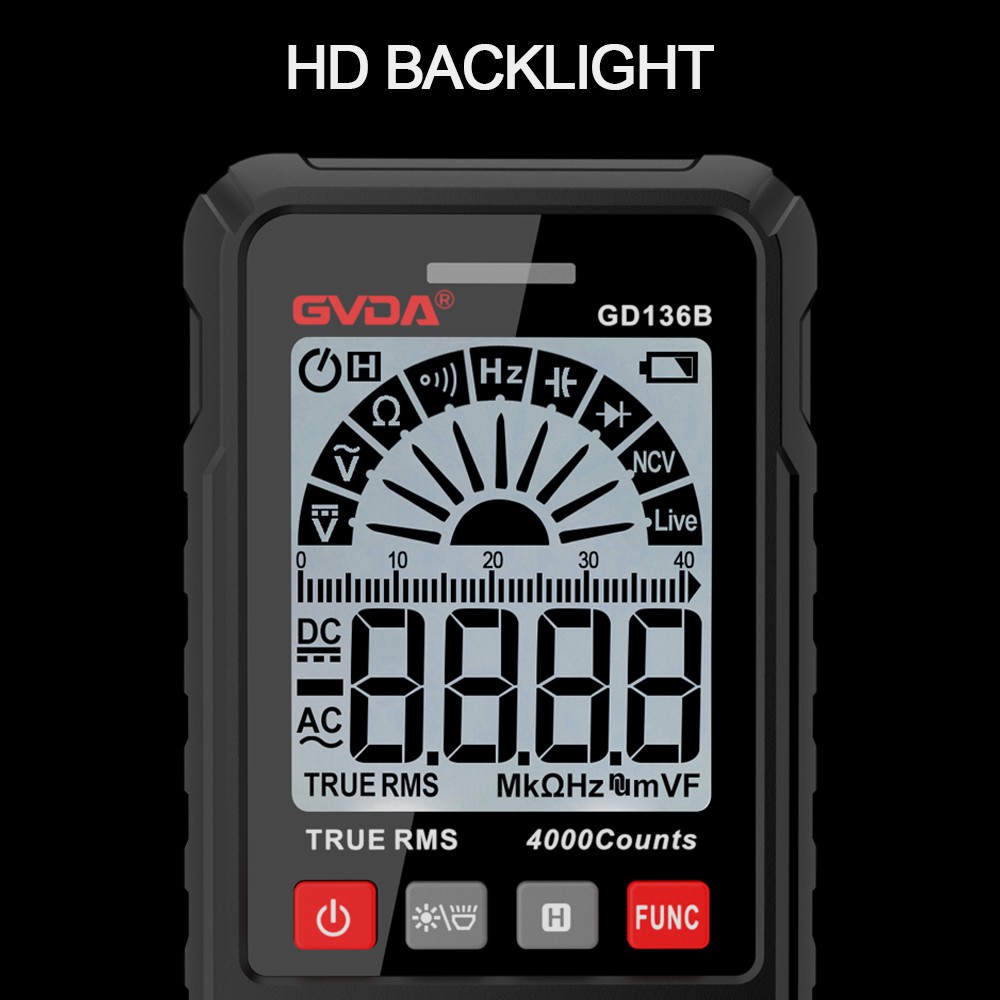
How to use a multimeter to measure whether the circuit is leaking electricity
The leakage circuit breaker is set to a safe tripping value of up to 30mA. With such a high current, whether you use the AC mode of a digital multimeter or the 10K mode of a resistor, you can easily detect the leakage indication.
When charged, first use a digital measuring pen to measure the outer side of the wire. If only "N" is displayed, it is normal. If the displayed data shows a certain voltage, it indicates poor wire quality or aging. There is a possibility of electric leakage.
Turn on the multimeter to AC 250V and measure the voltage at 220V+-220V+- zero for fire and ground. Look at how much power the household appliances are turned on, and a voltage of 5V to several tens of volts can be measured. This is the circuit impedance caused by the small diameter of the neutral wire, which makes the neutral wire live. If the zero ground display shows high voltage, it indicates that the zero wire diameter is small and generates heat, and it is not suitable for the power of household appliances. High power household appliances should be used at different times.
Turn off the main switch and disconnect the switch, unplug all plugs, including the indicator light (which is prone to misjudgment if not turned on), turn on the pointer multimeter, and use an ohm 10K range to test if the zero wire pointer does not move, which is considered normal
If the fire pointer does not move during retesting, it is considered normal
Finally, if the zero ground pointer does not move, it is considered normal
If the above measurements show slight movement of the pointer, it indicates that there is leakage. This phenomenon is caused by leakage in the kitchen and bathroom walls, resulting in slight leakage at the wire joints when exposed to humidity. When checking the circuit, first turn off the kitchen and bathroom circuit breaker and measure whether there is leakage.
Strictly speaking, a megohmmeter should be used to accurately measure wire leakage, but for leakage within 30mA, a multimeter with a pointer in 10k range can measure it. If a digital multimeter is used, it will be more sensitive.