How to judge the quality of capacitors with a multimeter
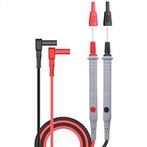
The capacity of the electrolytic capacitor is usually determined by the R×10, R×100, and R×1K blocks of the multimeter. The red and black test leads are respectively connected to the negative pole of the capacitor (the capacitor needs to be discharged before each test), and the quality of the capacitor is judged by the deflection of the test needle. If the needle swings to the right quickly, and then slowly returns to the left, the capacitor is generally good. If the needle does not rotate after swinging up, it means that the capacitor has broken down. If the watch hands gradually retreat to a certain position after swinging up, it means that the capacitor has leaked electricity. If the needle can't swing up, it means that the capacitor's electrolyte has dried up and lost its capacity. For some leaking capacitors, it is not easy to accurately judge whether they are good or bad by the above method. When the withstand voltage value of the capacitor is greater than the voltage value of the battery in the multimeter, according to the characteristics of the electrolytic capacitor with small leakage current during forward charging and large leakage current during reverse charging, the R×10K block can be used to reversely charge the capacitor and observe Whether the stop of the needle is stable (that is, whether the reverse leakage current is constant), the quality of the capacitor can be judged with high accuracy. The black test lead is connected to the negative pole of the capacitor, and the red test lead is connected to the positive pole of the capacitor. The capacitor that is slowly moving to the right has leaked and can no longer be used. The hands generally stay and stabilize within the range of 50-200K scale.