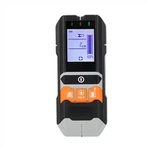
How to maintain high voltage clamp ammeter
As a tool for detecting and discriminating parameter values in various situations, high-precision instrument maintenance is crucial. Due to the infrequent adaptation times of detection instruments, it is important for users to maintain the instruments, extend their service life, and ensure accuracy and range
Taking the high-voltage clamp ammeter as an example, it is equipped with a high-voltage clamp strap, a high-voltage insulation rod, and a wireless receiver. High voltage detectors belong to high-precision and high stability instruments. Due to its infrequent use, paying attention to maintenance has become an essential key step. How to maintain a high-voltage clamp ammeter?
1. Pay attention to safety. When the line voltage exceeds AC600V during use, connect the insulation rod.
2. To avoid impact on the high-pressure clamp gauge, the iron core at the clamp head should not be cleaned with corrosive agents or rough materials. A soft cloth (such as eyeglass cloth) should be used, dipped in a clean anti rust and dehumidifying lubricant (such as WD-40), and gently wiped on the instrument.
3. The battery should be replaced before starting work when it is low. Pay attention to the polarity of the battery. If the instrument panel is not used for a long time, please remove the battery. To prevent battery leakage from corroding the clamp circuit board.
Attention: High voltage clamp ammeter is suitable for high voltage lines of 60kV and below. Practical and equipped with high insulation rods together.
Tips for using clamp current meter:
(1) Before inspecting the circuit, check whether the insulation shell of the clamp shaped meter iron core is intact and undamaged. Whether the jaws are securely closed.
(2) Open the instrument panel and display "OL", indicating that the instrument panel is functioning properly and can be tested
(3) When measuring, try to pass the tested wire through the center of the clamp as much as possible. You can test several times and read the value to ensure accurate reading.
(4) When measuring small currents, if conditions permit, the wire can be wound a few more times and then clamped with a clamp. The value tested in this way is a multiple of the number of wire turns, and the value is relatively accurate
(5) After the inspection is completed, close the instrument and clean the jaws to ensure that the instrument is in good condition for the next use.