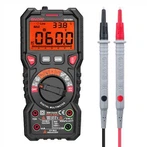
How to Measure Battery Capacity with a Multimeter
Method 1: Voltage method
Connect the positive and negative terminals of the multimeter to the positive and negative terminals of the battery respectively.
Adjust the knob of the multimeter to the voltage measurement range (usually V).
Turn off all loads on the battery to ensure that the measured voltage only comes from the battery itself.
Read and record the voltage value displayed on the multimeter.
Calculate the actual capacity of the battery using a specific formula based on its known capacity and the read voltage value. However, please note that this method requires knowledge of the initial capacity and voltage discharge curve of the battery, and the results may not be accurate.
Method 2: Constant displacement method
Connect the battery to a load resistance circuit with a known current.
Record the voltage and current values of the battery over time.
Create a chart of the recorded current time and voltage time data.
Estimate the capacity of the battery based on the time-varying curves of current and voltage. This method is relatively more accurate, but it requires some time and calculation.
Method 3: Battery Load Testing Method
This testing method requires the use of a special instrument called a battery load.
Fully charge the battery.
Connect the battery polarity to the load device and simulate the load condition of the battery in actual use.
Let the battery operate under actual load until it is fully discharged, and record the usage time.
The actual capacity of the battery can be calculated by the ratio of time to nominal capacity. This method is relatively simple, but it also requires some special equipment.