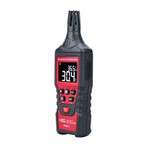
The pointer type multimeter is composed of the table and the head, the measuring circuit components and the transfer switch. It comes in two shapes: portable and pocket-sized. The dial, zero adjustment, test jack, etc. are installed on the panel. The functions of various multimeters are slightly different, but there are four basic functions: one is to test DC current, the other is to test DC voltage, and the third is to test AC voltage, the fourth is to test the AC and DC resistance. Some multimeters can measure audio level, AC current, capacitance, inductance and special values of transistors, etc. Due to the different functions, the shape and layout of the multimeter are also different!
1. When measuring resistance with a multimeter, you should first short-circuit the test leads, and turn the zero-adjusting potentiometer to zero, so that the pointer is at the ohmic zero position. If the pointer still does not reach 0, this phenomenon is usually due to the battery in the meter. If the voltage is insufficient, it should be replaced with a new battery for accurate measurement. And after each shift, the zero-setting potentiometer needs to be re-adjusted to zero. When selecting the ohm gear, try to choose the resistance value to be measured at a position close to the resistance reading in the center of the dial to improve the accuracy of the test results; if the resistance to be measured is on the circuit board, one of the feet should be soldered before testing. Otherwise, there are other shunt devices in the resistance, and the reading will be inaccurate! When measuring the resistance value, do not touch the pins of the test lead and the resistance with the fingers of both hands, so as to prevent the shunt of the resistance of the human body and increase the error.
2. Measure the inductance: Put the multimeter in the R×1 block, and connect the red and black test leads to any terminal of the inductor. At this time, the pointer should swing to the right. According to the measured resistance value, it can be identified in the following three situations:
A? The resistance value of the tested inductor is zero, and there is a short-circuit fault inside. B. The DC resistance value of the tested inductor is directly related to the diameter of the enameled wire used to wind the inductor coil and the number of turns. As long as the resistance value can be measured, the tested inductor can be considered normal.