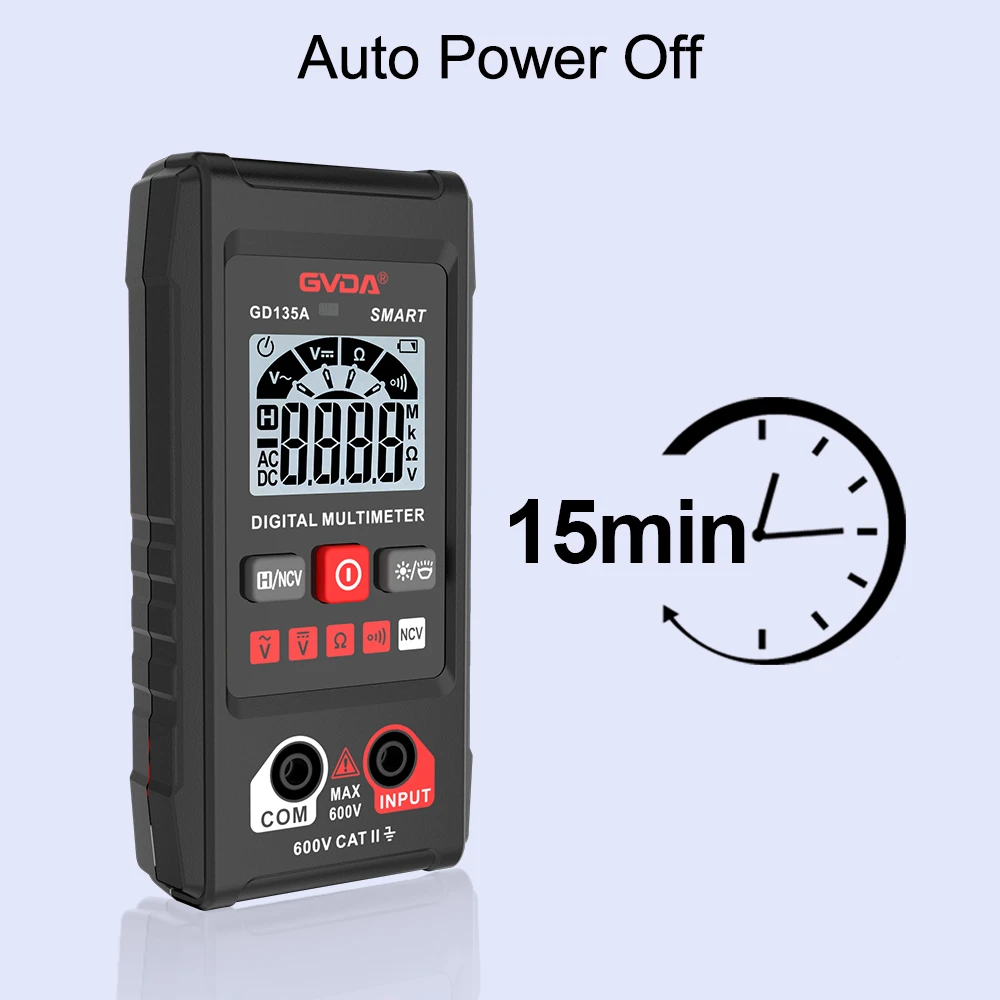
How to Measure Resistance Using a Multimeter
① Set the selector switch to a high‑multiplier range. Short the two test leads and adjust the ohm zero‑adjustment knob until the pointer points to the zero mark on the right end of the resistance scale. If the pointer cannot be zeroed, the internal battery voltage is low and the battery needs replacement.
② Touch the two test leads to the two pins of the resistor under test respectively. Read the resistance value indicated by the pointer and multiply it by the multiplier to get the resistance of the tested resistor.
③ For accurate measurement, keep the pointer near the center of the scale line. If the pointer deflection is small, switch to a lower multiplier range; if the deflection is large, switch to a higher multiplier range. Re‑perform ohm zero adjustment after each range change before taking measurements.
④ After measurement, remove the test leads, set the selector switch to the "OFF" position or the maximum AC voltage range, and store the multimeter properly.
Notes for Resistance Measurement: ① The resistor under test shall be removed from the circuit before measurement. ② Do not keep the two test leads shorted for a long time. ③ Do not touch the metal parts of both test leads or both pins of the resistor with two hands at the same time. It is recommended to hold both test leads with one hand. ④ Remove the battery from the multimeter if the ohm range will not be used for an extended period.