How to measure the direct current using a digital multimeter
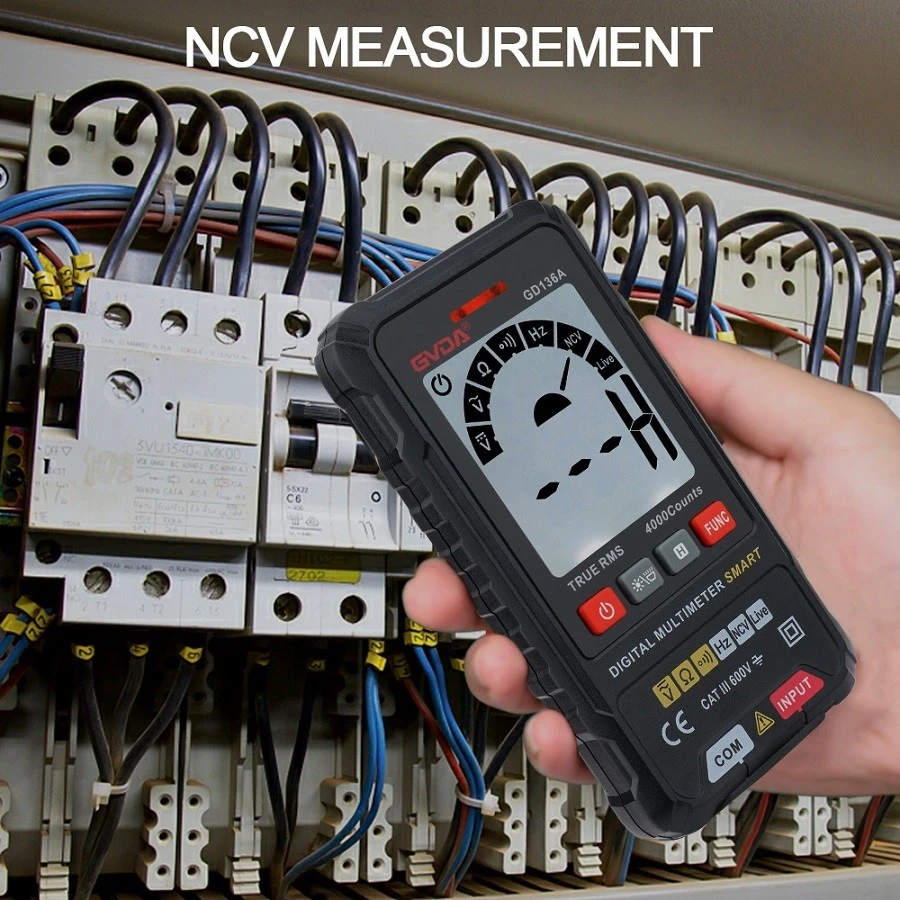
Digital Multimeter Nowadays, digital measuring instruments have become mainstream and have a tendency to replace analog instruments. Compared with analog instruments, digital instruments have high sensitivity, high accuracy, clear display, strong overload capacity, easy to carry, and simpler to use. The following takes the VC9802 digital multimeter as an example to briefly introduce its usage and precautions.
(1) Usage method a. Before use, you should read the relevant instruction manual carefully and be familiar with the functions of the power switch, range switch, jack, and special socket. b. Place the power switch in the ON position. c Measurement of AC and DC voltage: Set the range switch to the appropriate range of DCV (direct current) or ACV (alternating current) as needed, insert the red test lead into the V/Ω hole, insert the black test lead into the COM hole, and connect the test leads in parallel with the line under test. The reading is displayed. d Measurement of AC and DC current: Set the range switch to the appropriate range of DCA (DC) or ACA (AC), insert the red test lead into the mA hole (<200mA) or 10A hole (>200mA), and insert the black test lead into the COM hole. And just connect the multimeter in series to the circuit under test. When measuring DC flow, the digital multimeter can automatically display polarity. Measurement of e resistance: Set the range switch to the appropriate range of Ω, insert the red test lead into the V/Ω hole, and insert the black test lead into the COM hole. If the measured resistance value exceeds the maximum value of the selected range, the multimeter will display "1" and a higher range should be selected. When measuring resistance, the red test lead is the positive pole and the black test lead is the negative pole, which is exactly the opposite of the pointer multimeter. Therefore, when measuring polar components such as transistors and electrolytic capacitors, you must pay attention to the polarity of the test leads.
(2). Precautions for use
a If the magnitude of the voltage or current to be measured cannot be estimated in advance, you should first measure it to the highest range, and then gradually reduce the range to the appropriate position depending on the situation. After the measurement is completed, the range switch should be moved to the highest voltage range and the power supply should be turned off.
b. At full scale, the meter only displays the number "1" in the highest digit, and the other digits disappear. At this time, a higher range should be selected.
c When measuring voltage, the digital multimeter should be connected in parallel with the circuit under test. When measuring current, it should be connected in series with the circuit under test. When measuring DC flow, there is no need to consider the positive and negative polarity.
d. When the AC voltage block is misused to measure DC voltage, or the DC voltage block is misused to measure AC voltage, the display will display "000", or the low-digit numbers will jump.
e. It is prohibited to change the range when measuring high voltage (above 220V) or large current (above 0.5A) to prevent arcing and burning of switch contacts. fWhen “ ”, “BATT” or “LOW BAT” is displayed, it means that the battery voltage is lower than the operating voltage.