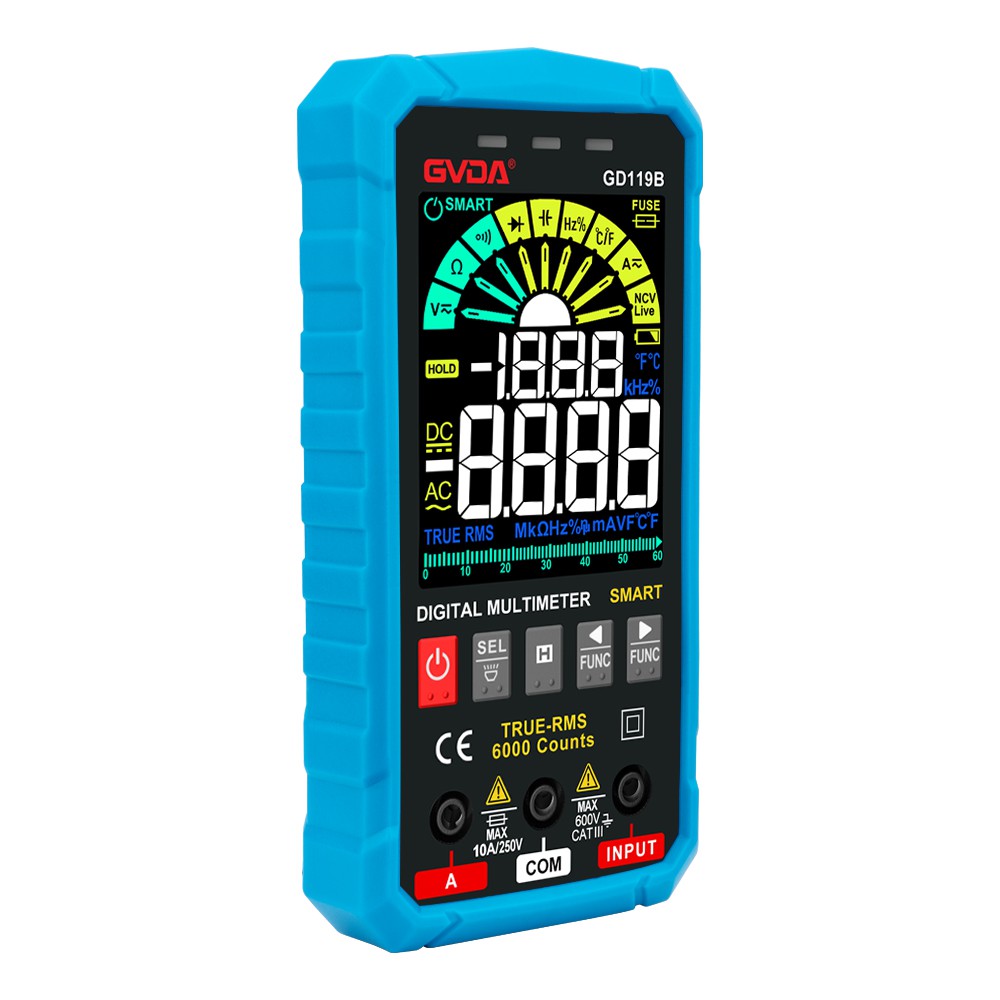
How to measure the quality of a transformer with a multimeter
method one:
First use the multimeter resistance gear RX1 or RX10 to measure the coils on both sides of the transformer. Both coils are connected. The primary resistance is large and the secondary resistance is small.
Then connect the two ends of the primary coil of the transformer to the AC voltage range of 50-100 volts of the multimeter, and use a dry battery to touch the two ends of the secondary coil of the transformer. At this time, the hands of the multimeter should have a strong swing, which is the effect of the induced current and the mutual inductance voltage, which proves that the transformer is normal and there is no short circuit between turns.
Method Two:
Use the resistance file of the multimeter. Measure the DC resistance of the primary and secondary coils. If the resistance is small. Indicates that the winding is not wired. This is only an estimate if the short circuit between the turns of the coil cannot be detected. It is also necessary to test whether the primary and secondary stages are short-circuited or whether the primary and secondary stages are short-circuited with the iron core. The primary can also be connected to an alternating current. Use the voltage file to test whether the output has voltage. Whether the voltage meets the requirements.
The quality of the transformer can be judged by measuring the DC resistance of the transformer winding.
The DC resistance of the transformer winding is very small, and the R×1Ω range of the multimeter can be used to detect whether the transformer winding has a short circuit or an open circuit.
Under normal circumstances, the DC resistance of the primary winding of a power transformer (step-down type) is mostly tens of ohms to hundreds of ohms, and the secondary DC resistance is mostly a few tenths of ohms to several ohms.
Compared with transformers, the DC resistance of transformer windings is generally very small, only a few tenths of an ohm. So you can judge whether the transformer is good or not according to the current resistance.