How to quickly identify the positive and negative poles of a battery without a multimeter
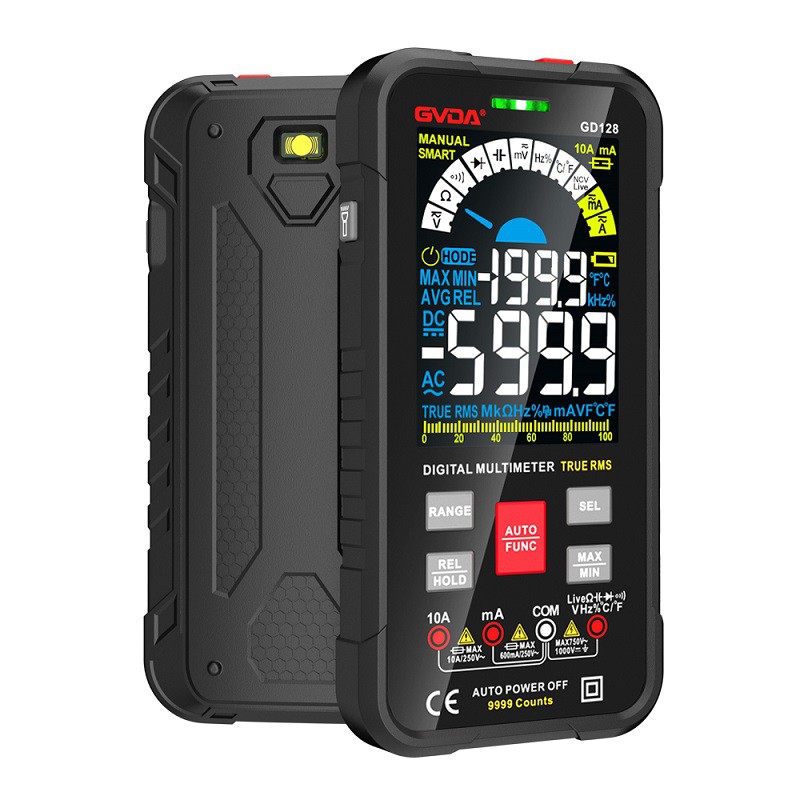
Usually it is indicated above. If it is difficult to see clearly, just measure it with a multimeter. Use a DC voltage range, such as a range of 20 volts or more, with the red probe connected to one side and the black probe connected to the other side. If the display shows a positive voltage, it means that the red probe corresponds to the positive terminal and the other end is the negative terminal. If the display shows a negative voltage, it is reversed. If there is no multimeter, these imaginative methods can also be used to determine:
1. To distinguish from the color of the pole, a brown pole indicates a positive pole, while a tile gray pole indicates a negative pole.
2. Generally, the positive pole on the front and negative pole on the back of the battery casing are determined by the manufacturer's label.
3. After connecting the wires to the terminal posts, immerse them in dilute sulfuric acid solution. The end with bubbles is the negative electrode, and the end without bubbles is the positive electrode.
4. Connect a light bulb between the two poles of the battery to form a circuit. Place a small magnetic needle under the wires that make up the circuit. The direction pointed by the magnetic needle should be perpendicular to the direction of the wire at this time. Using the right-hand rule to determine, the direction pointed by the thumb is the direction of current flow. The current flows out from the positive pole of the battery and back to the negative pole of the battery.
5. Insert the two leads on the battery terminals into the sliced potatoes, and the positive electrode will turn green around the wires; The other pole is the negative pole. www.diangongwugwu.com
6. Use a high-frequency discharge device to test and compare two batteries, where one end with the same reaction has the same polarity. However, this recruitment requires batteries with known polarity and more professional discharge devices.
7. The thicker column head is the+pole (positive pole), and the thinner column head is the - pole (negative pole).
8. Use saline solution to determine the positive and negative terminals of the battery. Connect one wire to each end of the battery, insert it into saline solution, and check the wire ends. The end with more bubbles is connected to the negative terminal of the battery, and the end with fewer bubbles is connected to the positive terminal of the battery. There is one thing to note about this trick: the container for holding salt water must not conduct electricity, and it is generally better to use a porcelain bowl. In addition to commonly used salt water, alkaline water, dilute sulfuric acid, etc. can be used as long as they can form an electrolyte.
9. A beaker is filled with copper sulfate solution. After closing S and powering on for a few minutes, if red copper appears on the carbon rod C, A is the positive electrode and B is the negative electrode; If red copper appears on the D carbon rod, A is the negative electrode and B is the positive electrode.
10. LED test method, if the LED emits red light, A is the positive pole and B is the negative pole; If the LED does not emit light, A is the negative pole and B is the positive pole.