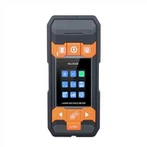
How to Test 4-in-1 Gas Detector
As combustible gas detectors diversify, there are other gas detectors widely available in the market. People's work and life safety have been prevented and guaranteed to a certain extent.
To control the 4-in-1 gas detector, a special type of circuit is used which measures the detector current in two points. When combustible gas enters the circuit chamber, one half of which is warm enough for the circuit to ignite the gas, which contains a or combustion catalyst. When the gas is burned, the current in the test area changes and the heat and electricity flowing through the circuit is changed. This change triggered the alarm device.
Infrared combustible gas detectors work in a completely different way. As the gas enters the test chamber, a beam shoots it. It actually goes to the gas; half of the gas goes to a receiver and the other goes back to the transmitter. The detector measures the intensity of the two beams to determine the presence of combustible gases. When the beam is the same, all is well, but a change in beam intensity on the gas side could mean something is wrong.
Gas detectors need to pay attention to the detection of toxic gases. First of all, we must pay attention to the inherent problems: according to the characteristics of toxic gases, such as chemical stability and regulatory levels at a relatively high concentration. Because they rely on air flow rather than positive pull, and samples, response times are generally slower. Calibration of four-in-one gas detectors is often difficult [Industrial Electrical Network-cnelc], requiring special accessories to be converted, and the operation mode of purpose diffusion through flow calibration. Furthermore, the flow between vias, via monitoring and calibrating under-diffusion equivalence is not always well documented.
Second, calibration can be further complicated if adjustments must be made at the control panel while gases are being applied to the sensor head of the remote diffuse gas detector. In some applications interfering gases may be present. The sample drawing method allows a chemical scrubber to be placed upstream of the sensor, absorbing interfering substances. All gas sensors measure partial pressure, and the sample that is actively drawn to the sensor is at slightly elevated pressure, while the sensor works in diffusion at ambient pressure. Therefore, sample drawing sensors typically have higher output sensitivity than diffusion sensors. It may be important to regulate many toxic gases at low levels. But how many toxic gases will have the necessary properties.
A combustible gas detector is a device that senses harmful gases and alerts people to the presence of danger. There are two main methods for detecting combustible gases: controlled combustion and infrared techniques. Each of these methods has its own advantages and disadvantages, although infrared methods are generally safe overall. In addition to the four-in-one gas detector, there is a set of various equipment for detecting non-combustible and harmful gases.