How to use a digital multimeter to measure unidirectional thyristors
Performance Identification of Unidirectional Thyristors
Unidirectional thyristor, abbreviated as thyristor (SCR), formerly known as thyristor, is a controllable rectifier element. Its circuit symbol is shown in Figure 1, where A is the anode, K is the cathode, and G is the control electrode.
Performance Identification of Unidirectional Thyristors
Unidirectional thyristor, abbreviated as thyristor (SCR), formerly known as thyristor, is a controllable rectifier element. Its circuit symbol is shown in Figure 1, where A is the anode, K is the cathode, and G is the control electrode.
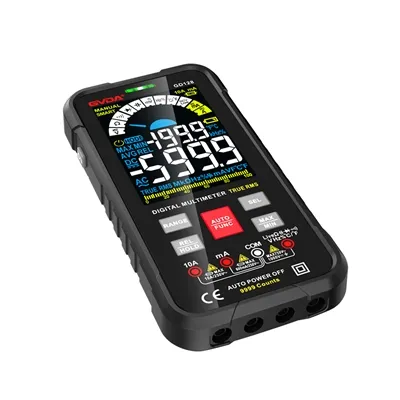
(1) The discrimination electrode is fixed in contact with either electrode with a red meter rod, while the black meter rod contacts the other two electrodes separately. If it displays 0.2-0.8V when touching one electrode and overflow when touching the other electrode, then the red meter rod is connected to G, and when overflow is displayed, the black meter rod is connected to A and the other electrode is K. If the measured result is not the same as above, the red meter rod needs to be replaced with an electrode and the above steps repeated until the correct result is obtained.
(2) The testing current provided by the diode block of a digital multimeter for distinguishing triggering characteristics is only about 1mA, so it can only be used to examine the triggering ability of low-power unidirectional thyristors. The operation method is as follows: fix the contact A with a red gauge stick unchanged, and the contact K with a black gauge stick. At this time, overflow (off state) should be displayed. Next, touch the red meter rod with G while keeping it connected to A, and the displayed value is generally below 0.8V (transitioning to a conductive state). Immediately remove the red meter rod from the control pole, and the conduction state will continue to be maintained. If this is the case after repeated tests, it indicates that the trigger of the tube is sensitive and reliable. This method is only applicable to tubes that maintain a small current.