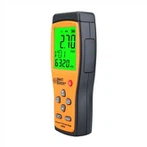
Testing method for a multimeter of ordinary light-emitting diodes:
Measure the R × 10K range with a Fluke digital multimeter
A pointer type multimeter with a 10k Ω gear can roughly determine the quality of the light-emitting diode. Under normal circumstances, the forward resistance value of the diode ranges from tens to 200k Ω, and the reverse resistance value is ∝. If the forward resistance value is 0 or ∞, and the reverse resistance value is very small or 0, it is prone to damage. This detection method cannot physically observe the luminescence of the light-emitting tube, as the 10k Ω gear cannot provide a large forward current to the LED.
Use two multimeters to measure together
If there are two pointer multimeters (* good of the same model), it can better check the luminous status of the light-emitting diode. Connect the "+" terminal of one multimeter to the "-" terminal of the other meter with a wire. The remaining "-" pens are connected to the positive pole (P zone) of the tested LED, and the remaining "+" pens are connected to the negative pole (N zone) of the tested LED. Both multimeters are set to the 10 Ω gear. Under normal circumstances, it can light up normally after being connected. If the brightness is very low and even does not emit light, both multimeters can be set to × 1 Ω. If it is still very dark and even does not emit light, it indicates that the LED performance is * * or damaged. It should be noted that two multimeters should not be placed at × 1 Ω at the beginning of the measurement to avoid excessive current and damage to the light-emitting diode.
Measurement of external auxiliary power supply
The optical and electrical characteristics of light-emitting diodes can be accurately measured using a 3V voltage regulator or two series connected dry batteries and a multimeter (pointer or digital). To achieve this, simply connect the circuit as shown in Figure 10. If the measured VF is between 1.4-3V and the luminescence brightness is normal, it can indicate that the luminescence is normal. If VF=0 or VF ≈ 3V is measured and does not emit light, it indicates that the light-emitting tube is damaged.