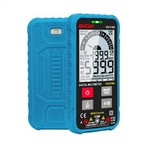
How to use a multimeter to judge the quality of composite pipes
Use a multimeter to judge the quality of composite pipes. Place the multimeter in the R xlk Ω range, connect the red meter rod to the gate G of the tube, and connect the black meter rod to the source S. At this point, the pointer on the meter head should not move and should be at least greater than 500k Ω, indicating that the gate is good. If it is less than 500K Ω, it indicates that the gate leakage of the tube is large and not easy to use. If the resistance value is close to zero, it indicates that the gate has broken down and the tested tube has been completely damaged.
Based on the above measurements, if the gate resistance is good, then swap the two multimeter bars, with the black bar connected to the gate G and the red bar connected to the source S. If the measured resistance value is the same as before the meter rod was swapped, it indicates that there is no gate protection diode inside the tested tube. If the resistance value is less than 10k Ω (usually around 2k Ω), it indicates that a gate protection diode has been installed inside the tube.
After connecting the wires, close switch K. At this point, the normally closed contact of the button switch will short-circuit the gate and source, that is, VGS=OV, the tube will not conduct, and the light-emitting diode in the circuit will not light up. Then press the button switch, and the normally open contact will short-circuit the gate and emitter. VGS will be negative, and the tube will conduct. Current will flow through the LED, and the LED will light up. The 300 Ω resistor in the figure is the current limiting resistor of the light-emitting diode. After measurement, meeting the above requirements indicates that the measured impedance composite tube is functioning properly.
If the LED lights up after closing switch K, it indicates that the source emitter or the source drain of the MOS transistor is connected, and the transistor is damaged. On the contrary, if the button switch is pressed, the LED still does not light up; It indicates that the grid of the tube may have been penetrated, or the grid leakage may be too large, losing its gate control function, and the tube cannot be used.