How to use a multimeter to measure the continuity of a live electrical circuit?
In electrical engineering and electric power drive, electricity is classified into weak current and strong current, and further divided into low voltage, high voltage, and extra-high voltage. However, within the weak current category, there can be strong current and even high voltage. For instance, in televisions, switching power supplies, and LED lamp power supplies, the voltage can range from as low as a few volts to as high as over 10,000 volts. Conversely, within the high voltage category, there are also low voltage and weak current components. This is because in control systems, low voltage is used to control high voltage, and weak current is used to control low voltage, all for the sake of operational safety.
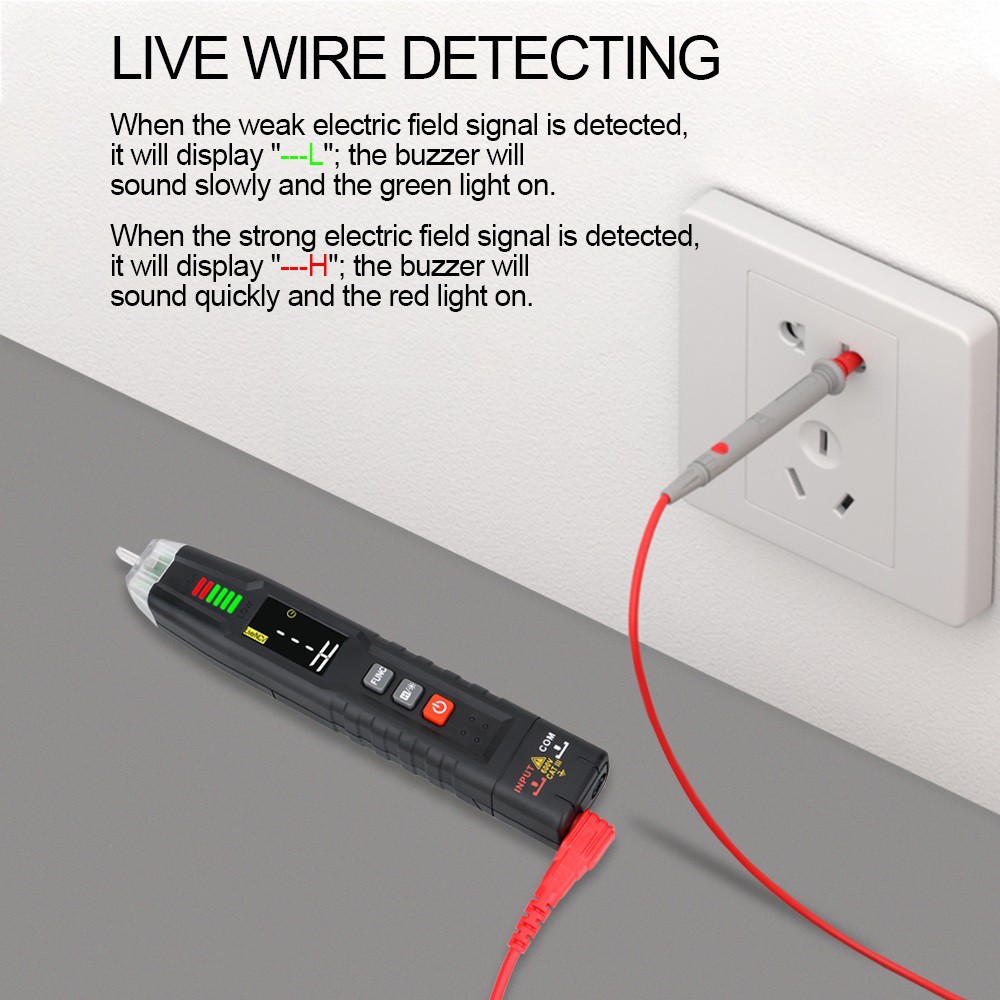
I don't approve of simply using a multimeter to measure the continuity of a live electrical circuit! You can use an electroprobe to check for the presence of electricity. Alternatively, after cutting off the power, you can use the ohmmeter range of the multimeter to measure the condition of the circuit.
Electrical work is a high-risk profession. Sometimes, it is necessary to measure data. Without electricity, it is impossible to measure the actual values of voltage, current, and waveform diagrams. Measuring while the circuit is live falls under live working. Although there are labor protection supplies such as insulating gloves and insulating shoes, it is really inconvenient to work with them on. Friends, you can imagine how tough this job can be!
As for how to use a multimeter, you can refer to the instruction manual or search on Baidu. People have already given good answers, so I won't repeat them. What I want to emphasize are the precautions for live measurements and how to use the multimeter more safely in work.
Measuring weak current while live
Don't measure blindly. Clearly distinguish between the weak current and strong current in the circuit, and select the appropriate range. Measuring voltages below DC or AC 24V generally poses no danger, but avoid touching the mains electricity, the high-voltage parts of the equipment, and large capacitors.
When measuring the high voltage in low-voltage equipment, the best approach is to cut off the power first, discharge (including the capacitors), then select the appropriate range for the test leads, position the measurement points properly, and then turn on the power to read the measurement data. Digital multimeters are equipped with a memory button, and you can press the memory button, which is relatively safer.
Since it is a live measurement and there are transformers and motors in the circuit, there is electricity at both the break point and below it. The electricity at the break point comes from the power source, and the electricity below the break point is the electricity that is fed through the windings or coils from another phase. You must pay attention to this phenomenon. Therefore, it is inaccurate to use a multimeter to measure the continuity of a live circuit! For the mains electricity, since it is single-phase electricity, if the live wire is broken, there will be no power source. However, if the neutral wire is broken, there will be a situation where electricity is detected but there is no voltage.
In conclusion, it is incorrect to use a multimeter to measure the continuity of a live circuit. You might get yourself into trouble if you're not careful. The best way is to cut off the power and use the ohmmeter range of the multimeter or a megohmmeter to measure the continuity of the circuit, which is more accurate.