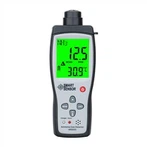
How to use a multimeter to simply measure the fault of the water pump motor
We know that there are single-phase asynchronous motors and three-phase asynchronous motors for water pump motors. The methods for repairing and inspecting these two types of motors may also be slightly different. Let's discuss with friends how to use a multimeter to easily measure the fault of the water pump motor.
The DC resistance of a winding is generally between a few ohms and several tens of ohms, because the resistance values of the main and auxiliary windings of a single-phase motor are different. For the main winding, the wire diameter used is relatively thicker and the resistance value is relatively smaller, while for the secondary winding, the wire diameter used is thinner and the resistance value will naturally be higher. Therefore, by using a multimeter to measure the resistance values of the main and auxiliary windings of the motor, we can determine whether there is a fault in the motor winding.
For example, I once repaired the motor in a twin tub washing machine at home. When the washing machine was spinning, the spin speed of its spin motor was low. At that time, I mainly suspected two problems with this motor. One was that the starting capacitor of the spin motor of the washing machine might fail; Another possibility is that there may be local short circuits in the stator winding of the motor. Both of the above situations may cause the motor's speed to slow down and manifest as a lack of power. I first checked the quality of the capacitor with a multimeter, and then checked whether there was a local short circuit in the stator winding of the dehydration motor. I set the resistance level to RX10 to measure the DC resistance of the motor's running and starting windings. Based on experience, under normal circumstances, for single-phase motors ranging from 30 watts to 45 watts, the group winding is generally between 60 ohms and 90 ohms, while the resistance of the secondary winding is generally between 100 ohms and 160 ohms. In general, the resistance of the secondary winding is about 60% higher than that of the main winding.