How to use the multimeter's live wire identification function
Ordinary electric pen: In the past, when it came to electrician maintenance and troubleshooting, one electric pen was used all over the world. Ordinary electric pens distinguish between live wires and neutral wires. Most people basically know that you can directly measure the live wires and neutral wires with an electric pen. When the electric pen lights up, it means: Live wire, if the electric pen does not light up, it is the neutral wire
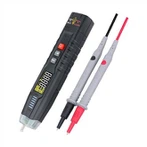
Digital pens: Since the advent of digital pens, ordinary pens have been rarely used. Digital pens have many functions, such as checking for disconnection without power, distinguishing between neutral and live wires, distinguishing the positive and negative poles of DC batteries, and determining whether wires are short-circuited. All are OK, so ordinary electric pens are gradually being eliminated. If you use a digital pen to distinguish the live wire and the neutral wire, directly use the electric pen to measure the live wire and the neutral wire, and observe the voltage of the digital pen. If the maximum voltage is 220V, it proves that it is the live wire. If the maximum voltage displayed is 12V or 36V, it proves that it is the neutral line.
Inductive breakpoint pen: The main function of the breakpoint pen is to find the location of the breakpoint inside the line after the wire is de-energized. The breakpoint pen distinguishes the live wire and the neutral line. Use the breakpoint pen to measure the live and neutral wires and breakpoints respectively. When the electric pen measures the live wire, the sound it makes is relatively rapid, and when it measures the neutral line, the sound it makes is relatively slow.
Every multimeter will have an AC voltage range. For the AC voltage range, you can measure the AC voltage. When measuring the voltage, use red and black test leads and place them on the live wire and neutral wire respectively, and the voltage will be displayed. However, when measuring the voltage, It must be placed in the appropriate range. For example, when measuring household voltages of 220V and 380V, the multimeter must be placed in the AC voltage range of 700V.
For AC voltage levels, not only can the voltage be measured, but the live wire and neutral wire can also be distinguished. It's just that many people don't know. A multimeter distinguishes between live wire and neutral wire. Put the multimeter in the AC voltage range, put the black test lead aside, use the red test lead to measure the live wire and neutral wire respectively, and observe the number on the multimeter. The larger number is the live wire. The smaller number is the zero line. If you feel that the number is not obvious, you can adjust the gear to a smaller level so that the number will be more obvious.