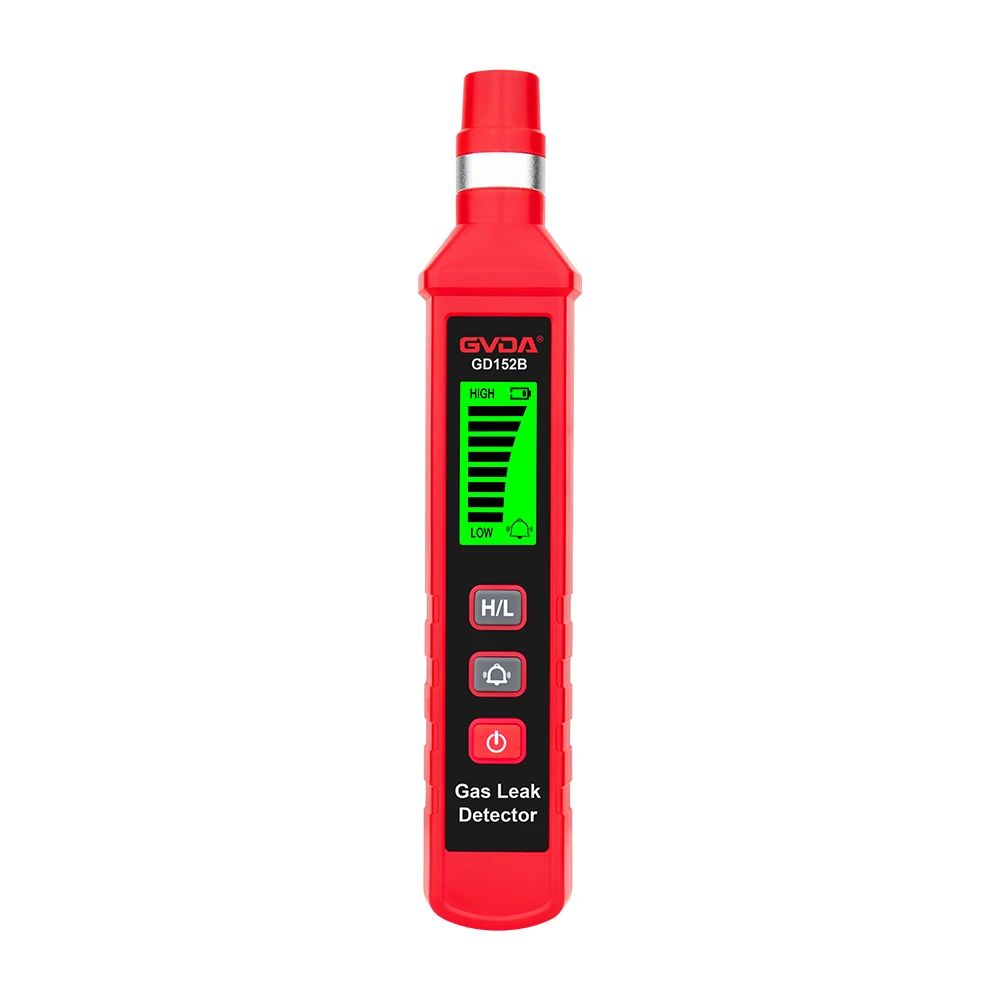
Important Factors for Correct Application of Gas Detectors
A combustible gas alarm system consists of detectors and alarm controllers. It is widely used in petrochemical industries with combustible gas hazards, including petroleum, city gas, chemical plants and oil depots, to detect gas leaks in hazardous indoor and outdoor areas. It serves as critical equipment for safeguarding production and personal safety.
When combustible gas is detected on site, the detector converts gas signals into voltage or current signals and transmits them to the alarm controller, which displays the gas concentration as a percentage of the Lower Explosive Limit (LEL). Once the concentration exceeds the preset alarm threshold, the device triggers audible and visual alarms, enabling on-duty personnel to implement timely safety countermeasures and prevent fire and explosion accidents.
Once fixed combustible gas alarms are installed in position, their locations are difficult to alter. Drawing on years of practical experience, the following factors shall be taken into account during deployment and proper operation:
① Identify all potential leakage points of the monitored equipment, analyze leakage pressure, emission direction and other parameters, draw a probe layout diagram, and classify leakage risks into Grade Ⅰ, Grade Ⅱ and Grade Ⅲ according to leakage severity.
② Judge the diffusion direction of combustible gas in the event of massive leakage based on site airflow, wind direction and other on-site conditions.
③ Draw a three-dimensional gas diffusion trend graph according to whether the leaked gas is denser or lighter than air and combined with air circulation rules, then formulate an initial layout plan at the downstream of gas flow.
④ Determine the leakage form at each point: slow seepage or jet ejection. Place detectors closer to the point for slow seepage and a proper distance away for jet leakage. Finalize the overall layout plan after comprehensive assessment to calculate the required quantity and model specifications of equipment.
⑤ Install one detection point every 10 to 20 meters in areas with high risks of large-scale combustible gas leakage in accordance with relevant regulations. For unattended small pump houses with intermittent operation, install a detector at the leeward side to guard against potential gas leaks.
⑥ Mount detectors on the horizontal plane above leakage points in locations with hydrogen release risks.
⑦ For gases heavier than air, install detectors on the horizontal plane below leakage points while taking surrounding environmental conditions into full consideration. Special attention shall be paid to arranging monitoring points in zones prone to combustible gas accumulation.
⑧ In open environments with freely diffusing combustible gases and poor ventilation, local gas concentration can easily approach or reach the LEL. Such areas are vital monitoring points that cannot be overlooked.
Proper operation of combustible gas alarms will not only ensure smooth work progress but also effectively protect your personal safety.