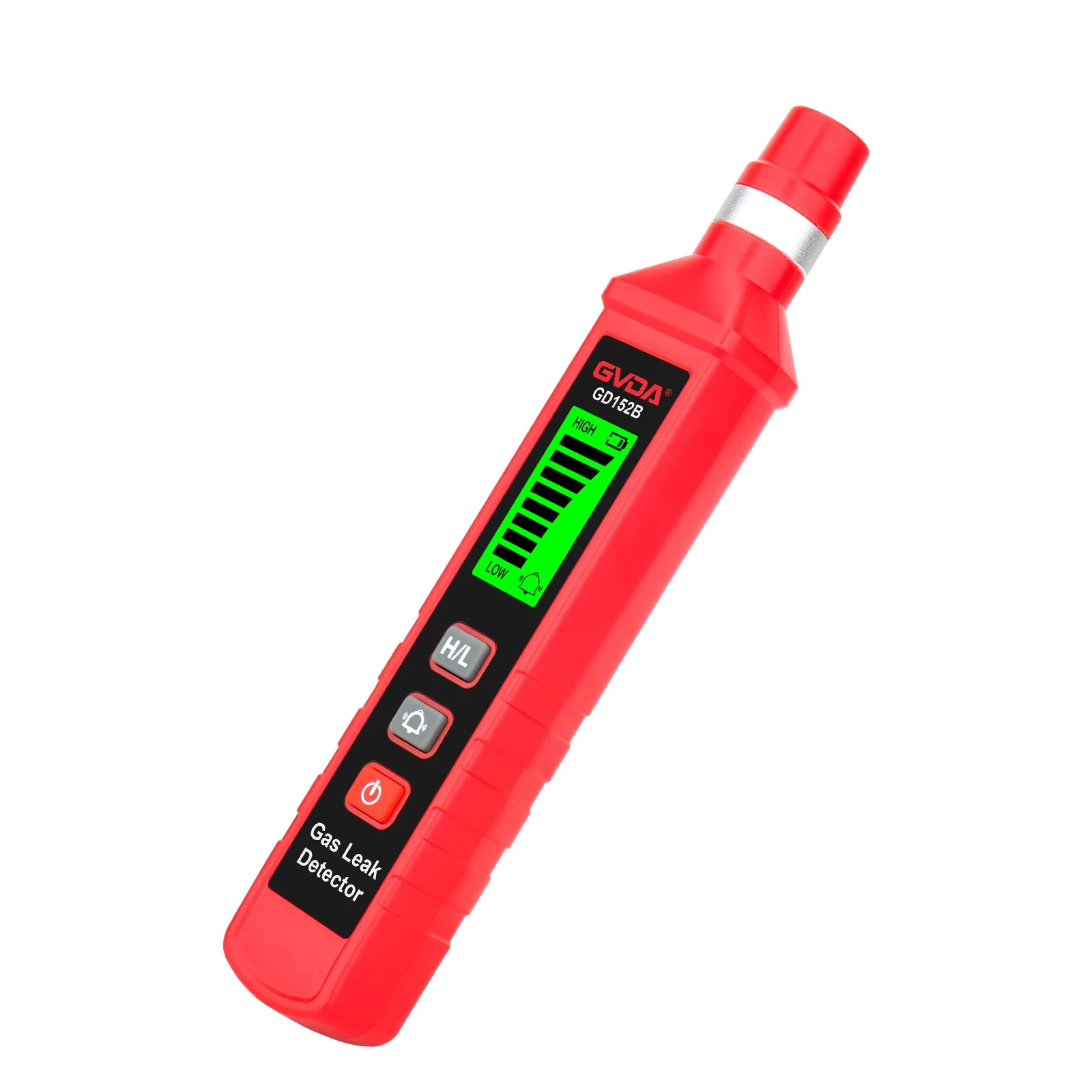
Important Points to Note During Gas Detector Operation
Like other analytical and testing instruments, toxic and harmful gas detectors adopt the relative comparison method for measurement. Firstly, calibrate the instrument with zero gas and standard concentration gas, and store the standard curve inside the device. During measurement, the instrument compares the electrical signal generated by the target gas concentration with that of the standard gas, and calculates the accurate gas concentration value. Therefore, zeroing the instrument at any time and performing routine calibration are indispensable steps to guarantee measurement accuracy.
It should be noted that although most gas detectors support replaceable sensors, this does not allow arbitrary matching of different sensor probes for one unit. Whenever a probe is replaced, apart from a certain sensor activation period, the instrument must be recalibrated completely. In addition, it is recommended to test the instrument's response with standard calibration gas before each use to ensure reliable and accurate performance.
② Watch out for cross-interference between different sensors
Generally, each sensor is designed for a specific target gas, yet no sensor has absolute selectivity. When selecting a gas sensor, fully investigate interference from other gases to ensure precise detection of the designated substance.
③ Pay attention to the service life of each type of sensor
All gas sensors have a limited service life. For portable devices:
Combustible gas sensors have a relatively long lifespan of approximately 3 years;
PID (Photoionization Detector) sensors can last 4 years or longer;
Electrochemical specific gas sensors have a shorter service life of 1 to 2 years;
Oxygen sensors have the shortest lifetime, roughly 1 year.
The service life of electrochemical sensors depends on the depletion of internal electrolyte. If the device will be idle for a long time, seal it and store it in a low-temperature environment to extend its service life. Fixed detectors feature larger overall structure, so their sensors generally enjoy a longer service cycle. Always use sensors within their valid period and replace them promptly once they fail.
④ Observe the concentration measuring range of the detector
Every toxic and harmful gas detector has a fixed measurement range. Accurate readings can only be obtained within the rated measuring scope. Long-term over-range measurement will cause permanent irreversible damage to the sensor.