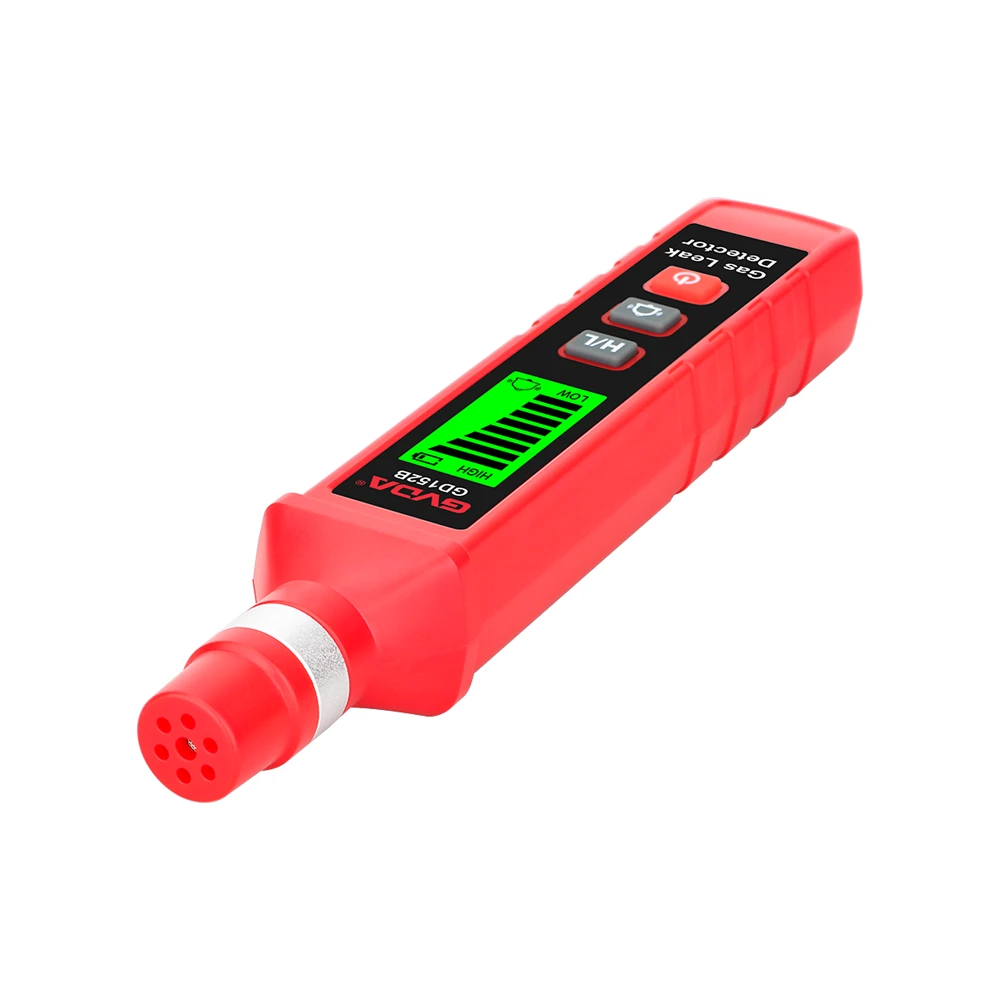
Stipulations of Management Code for Industrial Combustible Gas Detectors
These regulations are formulated to standardize the combustible gas detection activities during the company's production and maintenance operations and ensure operational safety.
Scope of Application
Applicable to gas concentration detection in flammable and explosive areas as well as confined spaces across the entire company.
I. Detection Instruments for Industrial Combustible Gas
① Manufacturers of fixed or mobile detection devices and instruments shall hold corresponding qualifications, including production licenses for measuring instruments and explosion-proof equipment.
② The devices/instruments shall feature high sensitivity, low susceptibility to temperature and humidity fluctuations, and strong anti-interference capability against other gases.
③ The instruments shall have passed inspection and verification by national or local market supervision and administration departments.
④ Before use, inspect the instrument in accordance with the operation manual and relevant technical documents. Detection can only commence after confirming normal operating status.
⑤ Upon completion of detection, recheck the instrument performance to verify that it remained functional throughout the whole testing process.
II. Detection Personnel
All inspectors must receive professional training and obtain valid qualification certificates.
A two-person team is mandatory for detection work: one operator for testing and the other for on-site supervision.
During detection operations, personnel are prohibited from carrying ignition sources and must wear complete personal protective equipment (PPE).
III. Detection Procedures
① In confined spaces and flammable and explosive zones, shut down relevant pipelines and valves and maintain natural ventilation. If natural ventilation is ineffective, implement mechanical ventilation for no less than 2 consecutive hours. ② After completing the above ventilation measures, the site supervisor shall submit an application to safety management personnel, and the Production Department will assign qualified inspectors to carry out testing. ③ Inspectors shall fully understand the hazardous properties of target gases and the structure of tested equipment and facilities. No entry is allowed without adequate site knowledge. ④ Confirm sampling points: collect readings at three positions (upper, middle, lower or front, middle, rear). Record the maximum reading measured at each point as the official data.
IV. Issuance of Detection Reports
① A detection report shall be issued by the inspector after each test with accurate and complete test data filled in. ② The report shall bear the signature of the inspector; unsigned reports shall be deemed invalid.
V. Maintenance and Repair
A detection report only certifies the safety condition of tested equipment at the time of measurement and cannot guarantee long-term stable safety afterwards. Therefore, the timing and arrangement for the next round of periodic detection shall be properly planned.