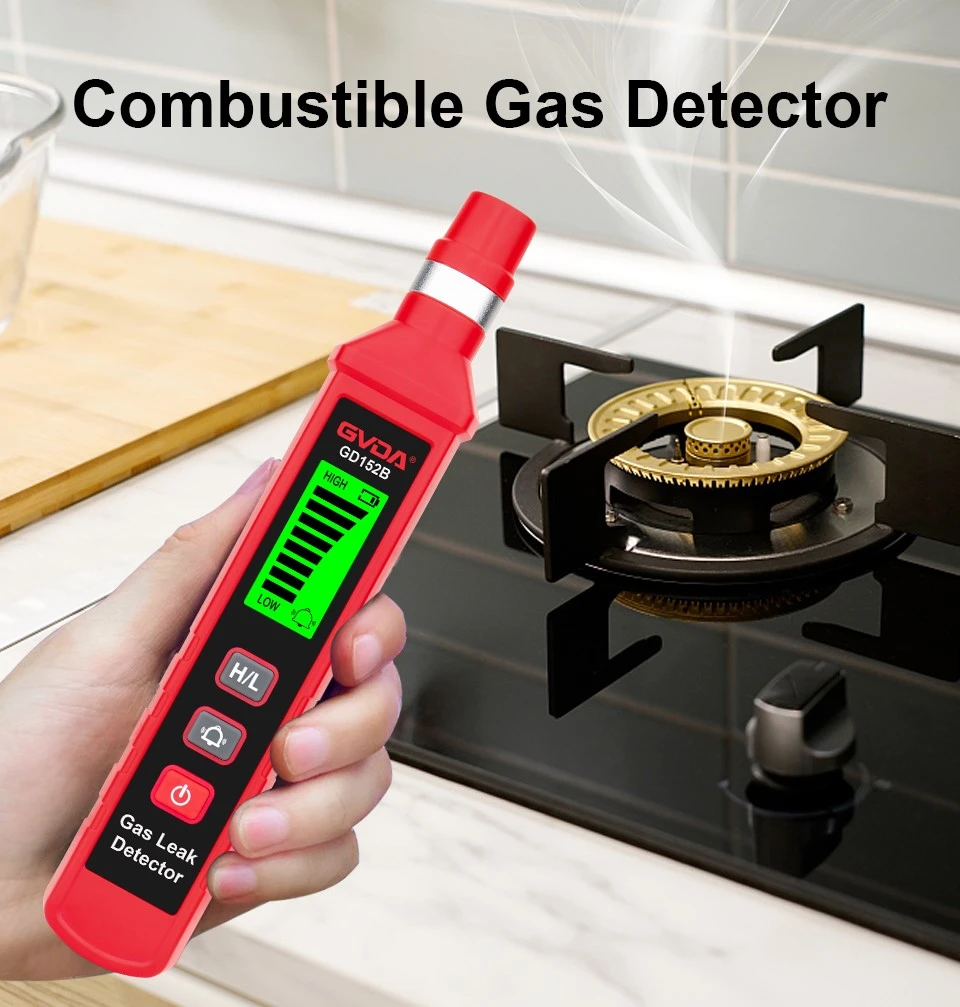
Malfunctions Occurring in the Operation of Combustible Gas Detectors
Combustible gas detectors are mainly deployed in petrochemical industries with flammable gas hazards, including city gas supply, petroleum refining and chemical manufacturing sectors. They are used to detect hazardous gas leaks in both indoor and outdoor locations, serving as indispensable instruments for protecting personal safety and production security.
Once a combustible gas leak is pinpointed, the detector converts the gas signal into voltage or current signals and transmits them to the alarm controller. The device automatically displays the gas concentration expressed as a percentage of the Lower Explosive Limit (LEL). Upon triggering of the audible and visual alarm, on-site staff can implement targeted safety measures to eliminate fire and explosion risks.
However, many improper selection practices prevail when purchasing gas detectors, which are mainly reflected in two aspects: ① Greater priority is given to combustible gas detection over toxic gas detection; ② More attention is paid to gases that cause acute poisoning rather than those that lead to chronic poisoning.
Painful lessons learned from numerous explosion accidents triggered by combustible gas leaks have driven widespread emphasis on flammable gas monitoring. In nearly all petrochemical and chemical plants, LEL detectors account for the vast majority of hazardous gas monitoring equipment. Nevertheless, relying solely on LEL detectors is far from adequate to fully safeguard employees' occupational safety and health.
It is true that most volatile hazardous compounds are combustible, yet catalytic combustion LEL detectors are not the optimal solution for all flammable gases. These detectors are calibrated specifically for methane, with inferior response performance for other substances.
Consequently, the detectable LEL threshold for gases other than methane is much higher than their permissible occupational exposure limits.
Prudent assessment tailored to actual site conditions is essential for the correct installation and operation of combustible gas detectors:
① Analyze on-site airflow and prevailing wind direction to predict the diffusion path of gas in the event of a spill.
② Classify the leakage mode at each release point (seepage or jet discharge), and formulate corresponding budgeting and response plans for different scenarios.
③ Determine the relative density of leaked gas versus ambient air, map the three-dimensional gas diffusion pattern, and develop a robust detector layout scheme accordingly. ④ In open-air environments with poor ventilation, freely dispersed combustible gases can easily reach or approach the explosive concentration range; such areas shall be designated as critical monitoring points.
⑤ Identify all potential leakage points on process equipment, and evaluate the severity of leaks based on gas outflow direction and release pressure.