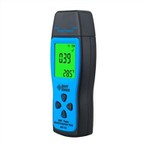
Industries where coating thickness gauges can be used
The coating thickness gauge is a newly created product, which offers the following primary advantages compared with the old coating thickness gauge:
1. Rapid measurement rate: 6 times that of other TT series;
2. High precision: After a quick calibration, the product's precision can reach 1-2%. This item has the potential to achieve an A rating on the market. Compared to similar home products like Times, its precision is substantially higher. Additionally, it costs more than imported goods like EPK;
3. Stability: Domestically produced goods have superior use and measurement stability than imported goods;
4. The function, data, operation, and display are all in Chinese. According to pertinent national and international standards, the covering layer created to protect and adorn the surface of materials, such as coating, plating, cladding, sticking, chemically formed film, etc., is referred to as coating. In the processing industry and surface engineering, measuring coating thickness has become a crucial component of quality inspection and is a requirement for goods to fulfill high requirements. There are specific standards for the thickness of the cladding in my nation's export goods and foreign-related projects in order to internationalize the products.
Wedge cutting, optical section, electrolysis, thickness difference measurement, weighing, X-ray fluorescence, -ray backscattering, capacitance, magnetic measurement, and eddy current measurement law are some of the main methods used to determine cladding thickness. The first five of these techniques are destructive testing; the measuring techniques are laborious and sluggish, and the majority of them are appropriate for sample inspection.Although the equipment are complex and expensive, and the measurement range is limited, X-ray and -ray procedures are non-contact and non-destructive measurements. Users must abide by radiation protection laws due to the radioactive source. The X-ray method can measure double coating, alloy coating, and extremely thin coating. The measurement of coatings and coatings with substrates with atomic numbers larger than 3 are both appropriate for the -ray approach. Only when determining the thickness of an insulating coating on a thin conductor is the capacitance method employed.