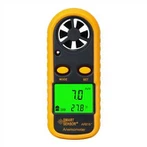
Instructions and principles for using a sugar meter
1, The design principle of a sugar meter
When light enters another medium from one medium, it undergoes refraction, and the ratio of the incident angle sine is constant, which is called the refractive index. The content of soluble solids in fruit and vegetable juice is directly proportional to the refractive index under certain conditions (at the same temperature and pressure). Therefore, measuring the refractive index of fruit and vegetable juice can determine the concentration (sugar content) of the juice. The commonly used instrument is a handheld refractometer, also known as a sugar mirror or handheld sugar meter. By measuring the soluble solid content (sugar content) of fruits and vegetables, the quality of fruits and vegetables can be understood, and the maturity of fruits can be estimated approximately. A handheld sugar meter is usually cylindrical in shape. Put the sugar solution to be measured into an open slot at the back, spread it evenly, close the lid, and then point the sugar meter towards the light. Look through the hole in the front to read the value.
2, The application range of sugar meter
Widely used in industrial sectors such as sugar production, food, beverages, as well as in agricultural production and scientific research. Suitable for measuring the concentration of various sauce (seasoning) products such as soy sauce, tomato sauce, etc., suitable for measuring the sugar content of products with high sugar content such as jam, syrup, liquid sugar, etc., suitable for the production line of fruit juice, cool drinks, and carbonated drinks, quality management, pre shipment inspection, etc., suitable for the process of fruit cultivation to sales, it can be used to determine the accurate harvest period and classify sweetness. In addition, the concentration determination of pulp in the textile industry has also been widely applied.
3, Instructions for using a sugar meter
(1) Hold the sugar meter horizontally and align the test window with the light source. Rotate the focusing handle to make the scale clear.
(2) Drop a few drops of distilled water into the test window, adjust the scale adjustment screw so that the boundary between the bright and dark areas coincides with the zero line of the scale.
(3) Drop 1-2 drops of the sample to be tested into the test window and close the window.
(4) Turn the test window towards the light source and observe the scale aligned with the light dark boundary to determine the measurement value.
(5) Check the temperature correction value table and add or subtract the correction value from the measured value to obtain the sugar content of the sample to be tested. (Usually, there is no need to check the temperature correction table)
(6) After the measurement is completed, dry the test window sugar meter with mirror paper. The principle is that when light enters another medium from one medium, refraction occurs, and the ratio of the incident angle sine is constant, which is called the refractive index. The content of soluble solids in fruit and vegetable juice is directly proportional to the refractive index under certain conditions (at the same temperature and pressure). Therefore, measuring the refractive index of fruit and vegetable juice can determine the concentration (sugar content) of the juice. The commonly used instrument is a handheld refractometer, also known as a sugar mirror or handheld sugar meter. By measuring the soluble solid content (sugar content) of fruits and vegetables, the quality of fruits and vegetables can be understood, and the maturity of fruits can be estimated approximately.