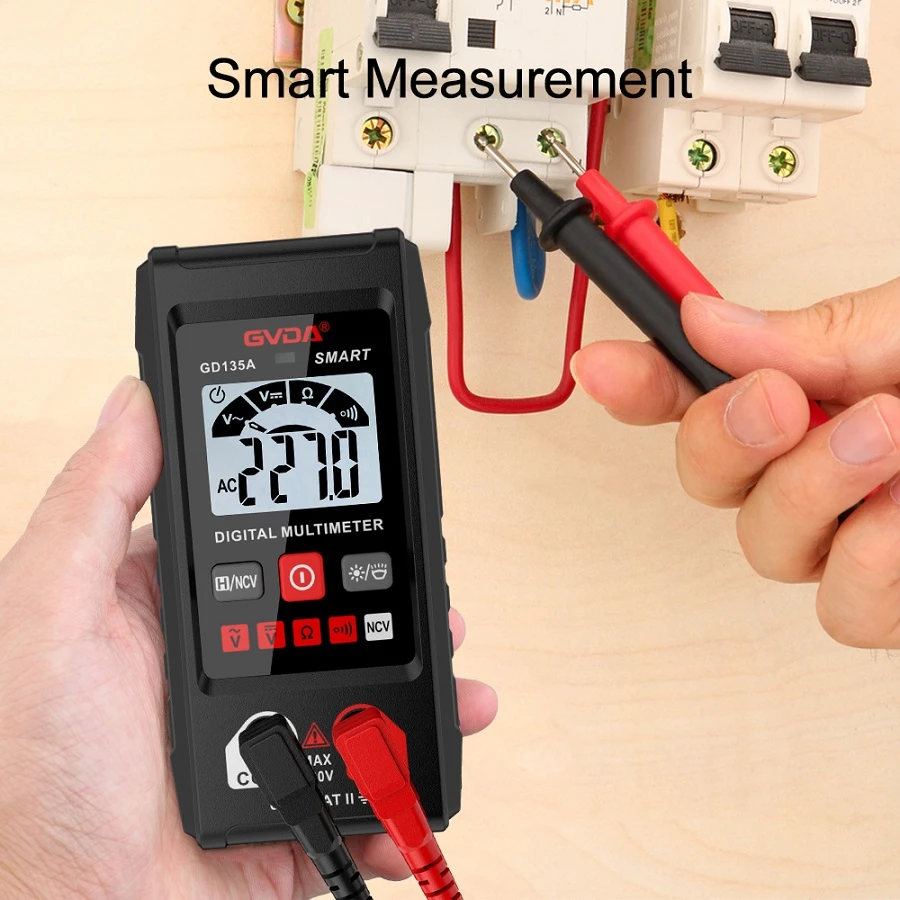
Instructions for Use and Notes on Digital Multimeters
Digital measuring instruments have now become mainstream and tend to replace analog instruments. Compared with analog instruments, digital instruments feature higher sensitivity, better accuracy, clear readouts, strong overload resistance, portability and simpler operation. Below is a brief introduction to their operating methods and precautions.
Digital multimeters are popular among radio enthusiasts for easy reading and comprehensive functions. A standard digital multimeter can measure resistance, test continuity with audible beep, measure the forward voltage of diodes, measure AC/DC voltage and current, and test the amplification factor and performance of transistors. Some models add extra functions such as capacitance, frequency and temperature measurement, data storage and voice readout, which greatly facilitate practical testing. However, improper operation can easily damage internal components and cause faults. Based on common failure cases, the following precautions are summarized for beginners to help avoid damage to digital multimeters.
Most digital multimeter failures are caused by incorrect range selection. For example, if the resistance range is selected while measuring AC mains voltage, internal components will be destroyed instantly once the probes touch the live mains. Always verify the correct measuring range before taking measurements. After use, set the range selector to 750 V AC or 1000 V DC. Left in this position, accidental measurements of other parameters will not damage the meter.
Some multimeters are damaged when the measured voltage or current exceeds the rated range. Measuring mains voltage in the 20 V AC range, for instance, will easily burn the AC amplifier circuit and disable the AC measurement function. Excessive DC voltage can also damage internal circuits. If the actual current exceeds the range during current measurement, usually only the internal fuse blows without further damage. When measuring an unknown voltage, start with the highest voltage range and switch to a lower range after reading to get a precise value. If the voltage far exceeds the meter's maximum range, use a high‑voltage probe. This applies to measuring anode high voltage and focus high voltage inside black‑and‑white televisions.