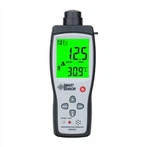
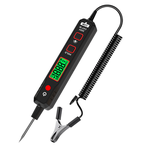
Internal Composition of the Voltage Tester Pen
The structure of a traditional voltage tester pen is simple. It consists of a high-value resistor, a neon bulb, a spring and a cap. The neon bulb does not light up at low voltage; it generally illuminates above 100 V. It is not easy to damage unless subjected to impact or dropping.
The resistance value of high-value resistors varies. Theoretically, a resistance greater than 500 kΩ meets the requirements. However, a higher resistance is preferred, though it cannot be infinitely large. An infinitely large resistance creates an open circuit; the pen will not light when measuring live conductors, which may lead to misjudgment. Therefore, the tester pen requires regular inspection and maintenance.
What happens if the resistor inside the tester pen falls below the specified value? Obviously, the user is exposed to electric shock risk when the pen contacts live objects. Electricians in particular have learned lessons from this hazard.
Hazards of a Damaged Voltage Tester Pen
An infinite resistance causes misjudgment. We may mistakenly believe that equipment is de-energized, which creates electric shock hazards during maintenance work and may result in severe personal injury.
Tester pens with resistance below 500 kΩ will produce a tingling sensation when touching live objects. If the resistance is even lower, it is equivalent to touching the live wire directly by hand, with serious consequences.
Summary
When purchasing a voltage tester pen, you may use a multimeter to check the internal resistance. A resistance of the order of megaohms (MΩ) indicates reliable quality and allows long-term use.