Introduction to Night Vision Devices and Optoelectronic Technology
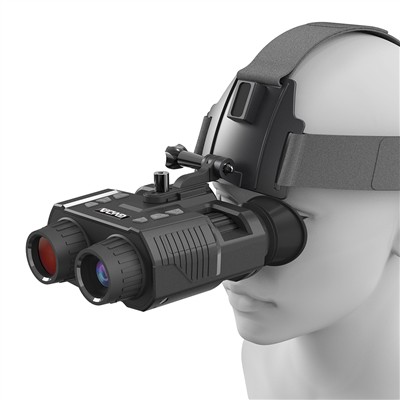
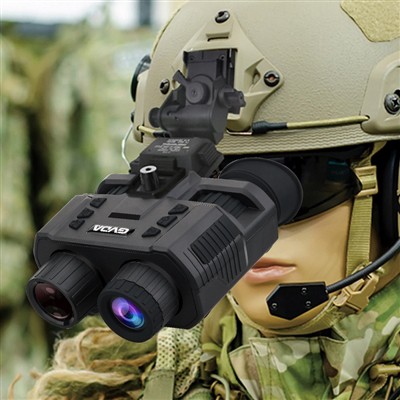
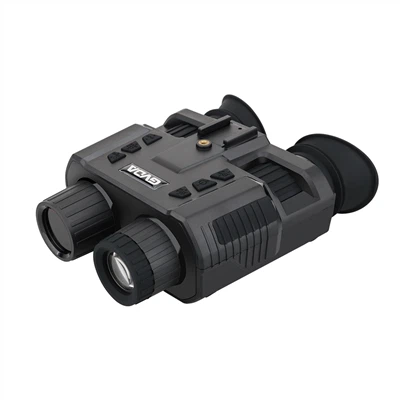
Night vision devices, also known as night vision goggles, night vision telescopes, and infrared telescopes, are instruments used for observation in complete darkness or low-light night conditions. They were first applied in the military field and later widely used in criminal investigation, security prevention, forest fire prevention, power and communication line inspection, site, farm and breeding ground monitoring, and even tourism and other fields. After half a century of development, night vision devices can be generally classified into the following types:
Low-light night vision technology, also known as image intensification technology, is an optoelectronic imaging technology that uses night vision goggles equipped with image intensifier tubes to enhance target images under weak light for observation. Low-light night vision devices are currently the most widely produced and commonly used night vision equipment abroad, and can be divided into direct observation and indirect observation types.
Infrared night vision technology is divided into active and passive types.Active infrared night vision technology performs observation by actively emitting infrared light and utilizing the infrared light reflected by the target. The corresponding equipment is the active infrared night vision device. Although active infrared night vision technology features clear imaging and simple manufacturing, it has a fatal weakness: on the battlefield, the infrared light from the infrared illuminator can be detected by enemy infrared detection devices. This weakness inevitably seals the fate of active infrared night vision technology being phased out.Passive infrared night vision technology achieves observation by relying on the infrared radiation emitted by the target itself. Simply put, it forms images based on temperature differences. Its resolution is relatively low, but it serves special purposes.
Some night vision devices have improved the semiconductor materials of the photocathode, making them sensitive to both low light and infrared radiation, integrating infrared and low-light night vision functions into one device. They function as low-light night vision devices on clear nights, and emit infrared light to act as active infrared night vision devices on rainy or foggy nights, with a longer effective range than pure passive low-light night vision devices.