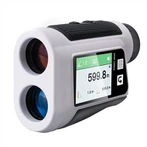
Introduction to related knowledge of anemometer
The working principle of the ultrasonic wind speed sensor is to use the ultrasonic time difference method to realize the measurement of wind speed. Due to the propagation speed of sound in the air, it will superimpose with the airflow speed in the wind direction. If the ultrasonic wave travels in the same direction as the wind, its speed will increase; conversely, if the ultrasonic wave travels in the opposite direction to the wind, its speed will slow down. Therefore, under fixed detection conditions, the speed of ultrasonic waves propagating in the air can correspond to the wind speed function. Accurate wind speed and wind direction can be obtained through calculation. Since the speed of sound waves is greatly affected by temperature when they propagate in the air; the wind speed sensor detects two opposite directions on two channels, so the effect of temperature on the speed of sound waves is negligible.
The ultrasonic wind speed sensor has the characteristics of light weight, no moving parts, strong and durable, and does not require maintenance and on-site calibration, and can output wind speed and wind direction at the same time. Customers can choose the wind speed unit, output frequency and output format according to their needs. Optional heating (recommended for icy environments) or analog output is also available upon request. It can be used in conjunction with computers, data collectors or other acquisition devices with RS485 or analog output.
If necessary, multiple units can also form a network for use. Ultrasonic anemometer is a relatively advanced instrument for measuring wind speed and direction. Because it overcomes the inherent defects of the mechanical anemometer, it can work normally all day long and is used more and more widely. It will be a powerful replacement for mechanical anemometers.