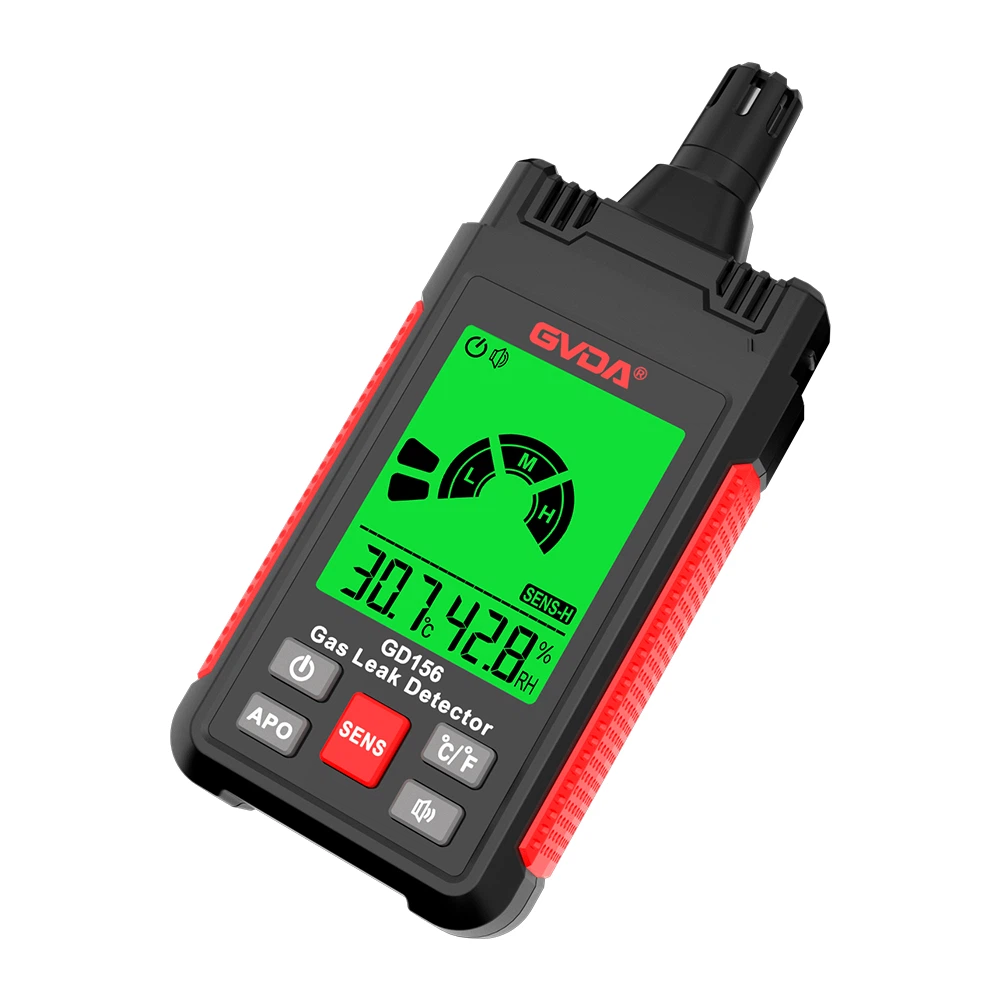
Introduction to the daily maintenance and calibration of portable gas detectors
Portable gas detector is a detection instrument used to detect hypoxia, explosion and other toxic and dangerous conditions and can issue alarms to protect human and property safety. If these instruments cannot be used correctly and reasonably, the consequences will be unimaginable. At the same time, in order for the gas detector to work normally, it is necessary to maintain the detection instrument. According to the maintenance cycle of portable gas detectors, it can be divided into daily maintenance and regular maintenance.
daily maintenance
The main work of daily maintenance is to check the integrity of the overall appearance of the portable gas detector and the battery power condition. At the same time, in order to ensure the correctness of the detection of the portable gas detector, a quick test is required to detect the correctness and accuracy of the instrument sensor's response to the gas. For instruments with built-in pumps, it is also necessary to check the air tightness of the pumping system (specific operation method: after turning on the instrument, block the intake terminal of the pumping system, such as the top of the sampling probe, until the instrument sends out a pump flow blocking alarm, which means The airtight performance of the pump suction system of the instrument is normal, otherwise the instrument cannot be used).
Regular maintenance
Since the sensor of the portable gas detector is a measuring instrument, the detection deviation will occur according to the passage of time, so it is necessary to regularly correct the deviation of the portable gas detector, which is what we often call calibration. According to the requirements of the International Safety Equipment Association, there is no so-called fixed period for regular calibration. It depends on the actual environment and frequency used by the portable gas detector. As long as the instrument fails to pass the quick test, it means that the deviation of the instrument sensor is too large, which will affect the detection. As a result, calibration is required.
In order to facilitate users to better define the management of portable gas detectors, we generally recommend that customers need to perform regular maintenance including calibration on portable gas detectors at least half a year. At the same time, for pump-suction portable gas detectors, additional regular maintenance is required, that is, regular inspection of the filter device of the pump-suction system (mainly check the internal filter membrane of the pump-suction product to see if it has failed, and judge The method of failure is to observe the color change of the filter membrane, the color of the clean membrane is pure white, and the color of the failed filter membrane is yellow-black).
A quick test, calibration check, or calibration of a portable gas detector needs to be considered when working in the following environments:
1. Long-term exposure or use in abnormal environments, such as high/low, high/low humidity, or air particle environments.
2. Exposure to high concentration (or over-range) target gas or vapor.
3. The catalytic combustion sensor responds to the environment where the filament is exposed to poisonous gas or inhibiting gas for a long time.
4. The electrochemical sensor is exposed to solvent vapor and highly interfering gas.
5. The storage and working environment with relatively poor conditions, such as the portable gas detector may fall to a hard surface or sink into water, will affect the instrument circuit.
6. The storage monitoring of portable gas detectors has changed.
7. Changes in the working environment of the portable gas detector may affect the normal use of the sensor.