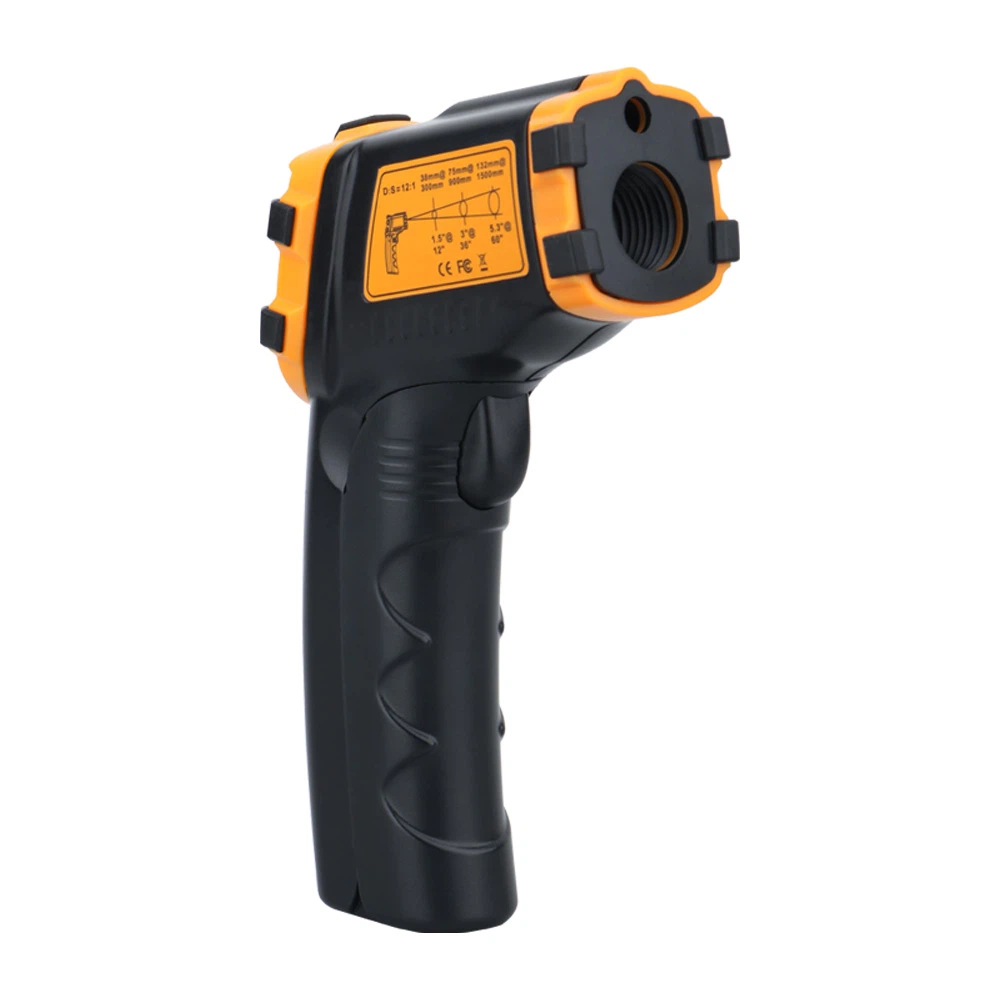
Introduction to the performance and application analysis of infrared thermometer
Speaking of infrared thermometers, I believe everyone is familiar with them. These products, which measure surface temperature by receiving the infrared radiation of the object being measured, have not been different in their core mechanism since their invention, and can be said to be a product category that is "more than traditional".
Is such a traditional product really that simple?
1. Environmental temperature compensation
In what situations is environmental temperature compensation needed?
Generally speaking, when the ambient temperature exceeds the measured target temperature, the ambient temperature compensation function needs to be used. Generally, high-end products have this skill. A typical case is measuring the temperature of steel billets in a secondary heating furnace. In this type of application, we commonly use Marathon series thermometers to directly measure the temperature of steel billets, while using Thermalert TX thermometers to measure the temperature of the furnace walls. By triggering the furnace wall temperature in real-time as a 0-5V signal to the main thermometer, real-time and accurate temperature measurement can be achieved.
2. External triggering of emissivity
The emissivity of different materials may vary, and in order to obtain the actual temperature, it is often necessary to set the emissivity of the corresponding material.
A thermometer with an external trigger interface for emissivity can control the emissivity value externally through a 0-5V signal, where 0V represents 0.100 emissivity and 5V represents 1.000 emissivity. Through signal control from external circuits, we can achieve automatic adjustment of emissivity, thereby obtaining more accurate true temperature measurement.