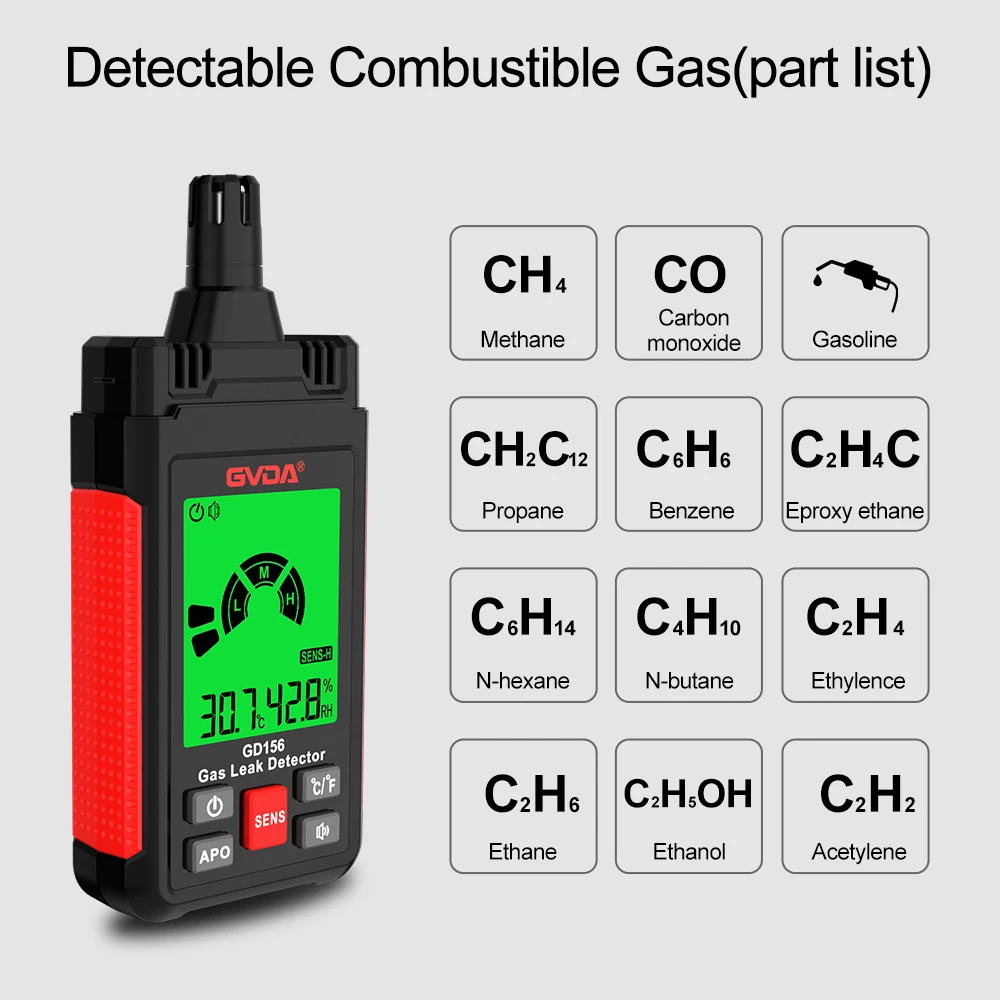
Key Considerations for the Proper Use of Portable Multi-Gas Detectors
① Identify all potential leakage points of the equipment to be monitored, analyze factors such as leakage pressure and emission direction, draw a layout diagram for probe installation positions, and classify the leakage risks into three grades: Grade Ⅰ, Grade Ⅱ and Grade Ⅲ according to leakage severity.
② Determine the diffusion direction of flammable gases in case of massive leakage based on on-site airflow, wind direction and other actual conditions.
③ Draw a three-dimensional gas diffusion trend graph by combining the density of leaked gas (heavier or lighter than air) and air circulation rules, and formulate the initial detector layout plan at the downstream area of gas flow.
④ Analyze the leakage form of each point, either slow seepage or jet ejection. Place detectors closer to the leakage point for slow seepage, and a proper distance away for jet leakage. Finalize the layout plan after comprehensive assessment, so as to calculate the required quantity and types of detectors.
⑤ For areas with high risk of large flammable gas leakage, install one detection point every 10 to 20 meters in accordance with relevant regulations. For unattended small pump houses with intermittent operation, install one detector at the leeward side to guard against potential gas leaks.
⑥ In areas with hydrogen leakage risk, mount detectors on the horizontal plane above the leakage points.
⑦ For gases denser than air, install detectors on the horizontal plane below the leakage points with full consideration of surrounding environmental conditions. Pay special attention to setting monitoring points in areas prone to flammable gas accumulation.
⑧ In open environments with freely diffusing flammable gases and inadequate ventilation, local gas concentration may easily approach or reach the lower explosive limit (LEL). Such locations shall not be overlooked when arranging safety monitoring points.