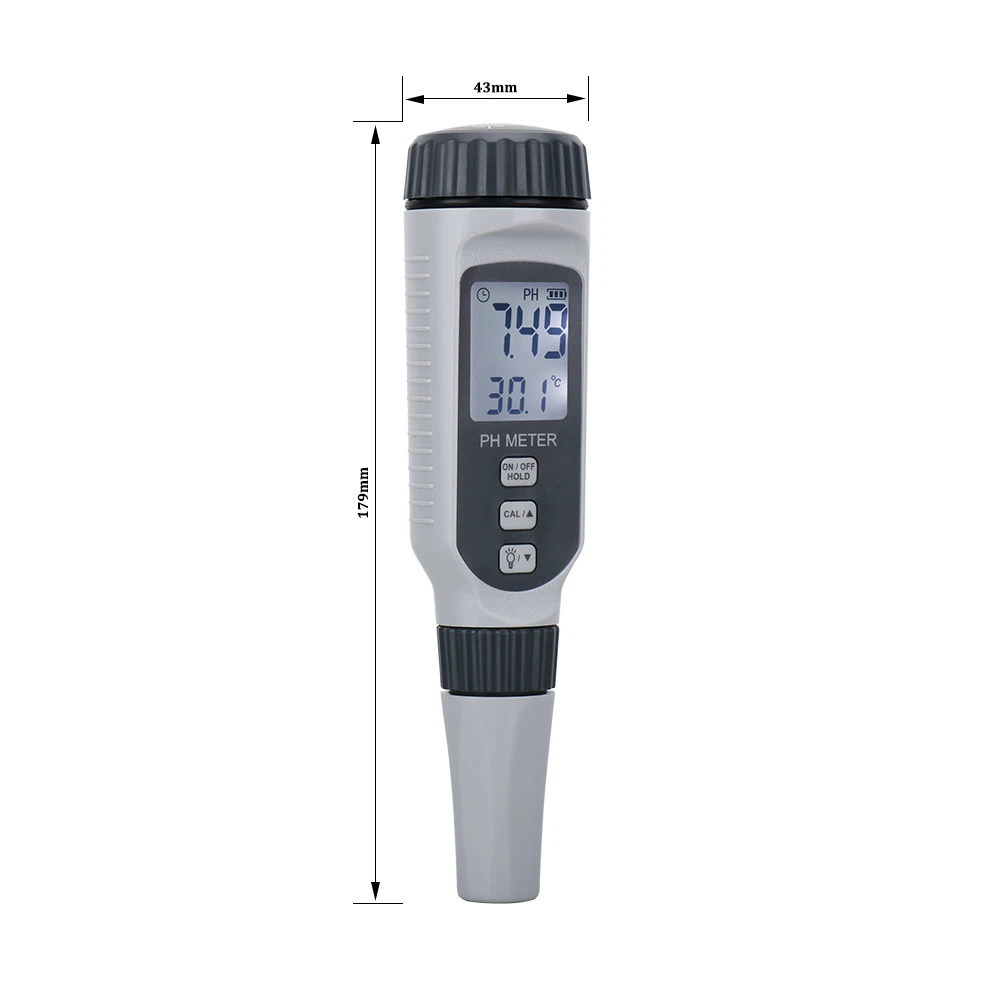
Key points for using pH/acidity meter electrodes
When the pH/acidity meter is not used in the short term, it can be fully immersed in distilled water or 1 × 10⁻⁴ hydrochloric acid solution. But if it is not used for a long time, it should be stored dry and avoid soaking with detergent or other absorbent reagents.
2. Before use, check the bulb at the front end of the pH/acidity meter glass electrode. Under normal circumstances, the electrode should be transparent and free of cracks; The bubble should be filled with solution and there should be no bubbles present.
When measuring solutions with high concentrations, try to shorten the measurement time as much as possible. After use, clean carefully to prevent the measured solution from adhering to the pH/acidity meter electrode and contaminating it.
4. After cleaning the pH/acidity meter electrodes, do not use filter paper to wipe the glass film. Instead, use filter paper to absorb it dry to avoid damaging the glass film, preventing cross contamination, and affecting measurement accuracy.
During measurement, pay attention to the silver silver chloride internal reference electrode of the pH/acidity meter electrode, which should be immersed in the chloride buffer solution inside the bulb to avoid the occurrence of numerical jumps in the display part. When using, be careful to gently shake the electrode a few times.
6. pH/acidity meter electrodes should not be used in strong acids, bases, or other corrosive solutions.
7. It is strictly prohibited to use in dehydrating media such as anhydrous ethanol, potassium dichromate, etc.
Notes:
1. After initial use or long-term use, a standard solution must be used for positioning before measurement. Example: Calibrate with 4.01PH standard buffer solution, adjust the back screw with a small screwdriver to display 4.0PH, and then put it into normal use.
2. Between each sample measurement, the electrodes must be rinsed with deionized water or distilled water to avoid cross contamination of the solution.
3. After replacing with other types of batteries or electrodes, a calibration work should be carried out by opening the upper battery box of the instrument, where a potentiometer can be seen. Use 4.01PH standard solution for positioning, adjust the screws on the back to make the instrument display 4.0PH, then use 9.18PH standard solution for calibration, adjust the calibration potentiometer inside the battery box to make the instrument display 9.2PH, cover the battery box, and the instrument calibration is completed.
4. When the sample temperature exceeds 40 ℃, the same method can also be used for calibration, provided that the standard solution is heated to a temperature close to the sample temperature before calibration, which can also ensure the same accuracy.
5. The above methods can also be used to test electrode performance and calibrate instruments.
6. Keep the electrode plug and instrument socket clean and dry.