Low cost fluorescence and bright field microscope design
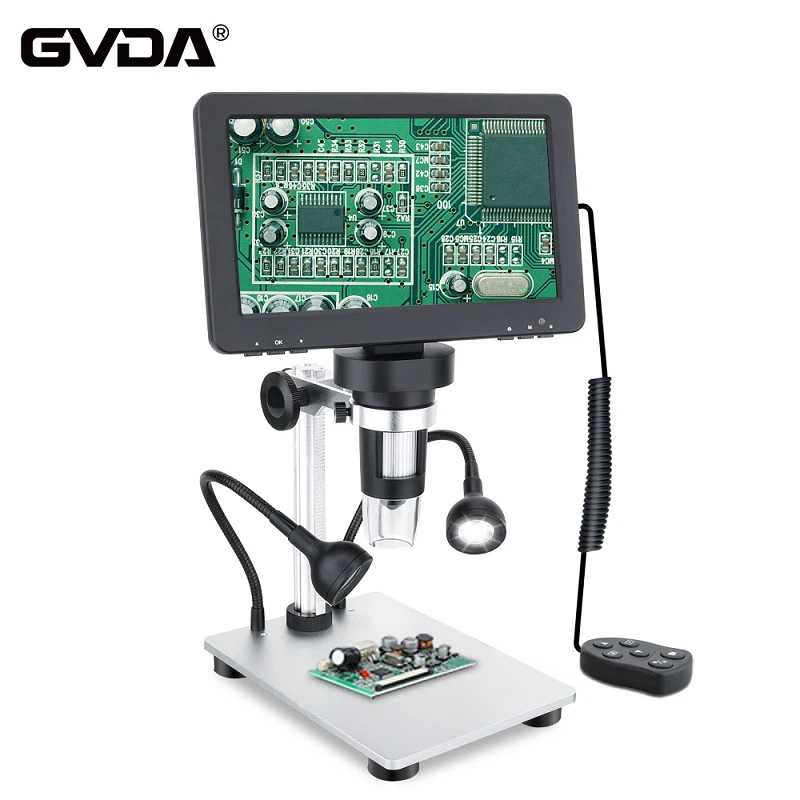
In this guide, I will review the basic principles of fluorescence microscopy and how to construct three different low-cost fluorescence microscopes. These systems typically cost thousands of dollars, but recent efforts have made them easier to obtain. The design I am introducing here uses smartphones, dSLR, and USB microscopes. All of these designs can also be used as open field microscopes.
Step 1: Overview of fluorescence microscopy
To understand the basic concepts of fluorescence microscopy, imagine the dense forests, trees, animals, shrubs, and other forests that live in the forest at night. If you shine a flashlight into the forest, you will see all these structures and it is difficult to imagine specific animals or plants. Assuming you are only interested in seeing blueberry shrubs in the forest. To achieve this, you need to train fireflies to only be attracted by blueberry bushes, so that when you look at the forest, only blueberry bushes will light up. You can say that you marked the blueberry bushes with fireflies, so you can see the blueberry structures in the forest.
In this analogy, the forest represents the entire sample, the blueberry shrub represents the structure you want to visualize (such as specific cells or subcellular organelles), and fireflies are fluorescent compounds. The situation of shooting a flashlight alone without fireflies is similar to a bright field microscope.
The next step is to understand the basic functions of fluorescent compounds (also known as fluorophores). Fluorescent clusters are actually small objects (nanoscale) designed to connect specific structures in the sample. They absorb light of a narrow range of wavelengths and re emit light of another wavelength. For example, a fluorescent group can absorb blue light (i.e. the fluorescent group is excited by blue light) and then emit green light again. Usually, this is summarized through excitation and emission spectra (as shown in the figure above). These charts show the wavelengths of light absorbed by the fluorophore and the wavelengths of light emitted by the fluorophore.
The design of the microscope is very similar to that of a regular open field microscope, with two main differences. Firstly, the light illuminating the sample must be at the wavelength of the excited fluorescent group (for the example above, the light is blue). Secondly, the microscope only needs to collect emitted light (green light) while blocking blue light. This is because blue light is everywhere, but green light only comes from specific structures in the sample. To block blue light, microscopes usually have something called a long pass filter that allows green light to pass through without blue light. Each long pass filter has a cutoff wavelength. If the wavelength of light is greater than the cutoff wavelength, it can pass through a filter. Therefore, the name is "Long Distance Pass". Shorter wavelengths are blocked.
Step 2: Modeling a microscope using optical optics
This is an additional step in designing the basic principle of a microscope. There is no need to build a fluorescence microscope, so if you don't want to delve into optics, you can skip it.
Both bright field and fluorescence microscopes can be modeled using ray optical devices. The basic premise of ray optics is that the behavior of light is similar to that of light propagating away from a light source. When you look around the room, you will see the sunlight outside the window or the light brought by the light bulb. Then the light is absorbed or reflected by objects in the room. Some reflected light will make it face your eyes. If an object is illuminated, you can imagine each point on the object emitting light in all directions (as shown in the above image). The lens, like the lens in our eyes, focuses the light to a point so that we can see the object. Without a lens, light continues to propagate outward and does not form an image.