Luminous intensity of illuminometer
Luminous intensity (Candlepower): Luminous intensity, abbreviated as luminosity, refers to the luminous flux emitted from a solid angle of a light source (unit: sr), which is the density distribution of the luminous flux emitted by the light source or lighting fixture in a selected direction in space, in candlelight (cd). A light source with a luminous intensity of 1cd can emit a luminous flux of 12.57lm. Luminance: The density of the luminous flux received on the illuminated plane, measured by the luminous flux per unit area. A light flux of 1lm is evenly distributed on a surface of 1 square meter (m2), resulting in an illuminance of 1 lux (environmental technology>illuminometer); A light flux of 1lm falls on a surface of 1 square foot (ft2), and its illumination value is 1 footcandle (fc).
Luminance, Brightness: When a person's eyes see something, it can be expressed in two ways: firstly, it is used for higher luminous values, such as a light source or lamp, and is directly represented by its luminous intensity; The other is used for those who do not emit light but only reflect light, such as indoor surfaces or general objects, expressed in brightness. Luminance refers to the luminous intensity emitted or reflected per unit area of the subject in a certain direction, used to display the difference in brightness of the subject. The metric unit is candela/square meter (cd/m2) or nit, and the English unit is Footlambert (fl).
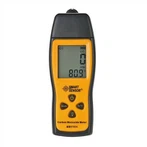
Reflectance or reflectivity factor: The brightness of a surface depends on the amount of light falling on it and the ability of the surface to reflect light; The amount and distribution of light it can reflect depend on the properties of the material surface, represented by the ratio of reflected light to incident light. The reflection ratio of the black surface, which is called the reflection ratio or reflectivity (%) of the material surface, is 0, meaning that no matter how much light falls on it, there is no brightness generated and it is completely absorbed; On the contrary, the reflectance of a * * white surface is 1 (reflectance 100%, absorption 0%). To measure the reflectance, first place the illuminometer on the surface of the object to read its surface illuminance value Ei (Incidentlight), and then place the illuminance value 5-8cm above it (with the photosensitive part facing the surface and ensuring no shadow obstruction) to measure its reflected illuminance value Er (Reflectedlight). The quotient of the surface illuminance divided by the reflected illuminance is the reflectance of the material surface