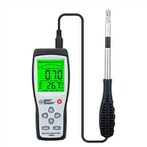
Machine Fault Diagnosis – CEM Sound Level Meter
Modern industrial production cannot do without machines, and the application of engines in machines often generates various types of noise. In the current era of promoting environmentally friendly production, the use of noise meters for noise control has become one of the essential methods for noise control.
The selection of noise meters should be differentiated, and different types of noise meters should be used to measure different environments. Guangzhou Hongcheng has launched a series of professional noise meters, such as the DT-85A noise meter, which is suitable for measuring noise in residential areas, schools, and homes; The noise meter DT-815 is particularly suitable for measuring mechanical industrial noise, and its series of noise meters can be widely used in various noise engineering, quality control, health prevention, and environmental sound measurement applications, such as residential areas, industrial and mining areas, schools, airports, and other occasions.
Mechanical production is used for noise control. When diagnosing faults caused by excessive engine noise, a noise meter can be used for initial troubleshooting. For example, if the noise is generated by an air compressor or power take-off, do not mistake it for engine noise. Remove the accessory drive belt to eliminate the noise caused by these devices. Noise can also spread to metal parts that were originally fine, so using a noise meter stethoscope will help determine the location of the machine's noise.
When the handheld portable noise meter reaches each measurement position, if the noise heard varies with the crankshaft speed (engine speed), the noise may be related to the crankshaft, connecting rod, piston, and piston pin. According to the changes in noise data on the noise meter, if the noise varies with the camshaft speed (half speed of the engine), it may be related to the valve transmission components. A handheld digital noise meter can help determine whether the noise is related to components operating at the speed of the crankshaft or camshaft.
Components and accessories driven by the engine, such as gear driven fan clutches, hydraulic pumps, belt driven chargers, air conditioning compressors, and superchargers, may all contribute to engine noise. Using a noise meter as an aid, the following information can be used to guide the diagnosis of engine noise:
Main bearing noise: The knocking noise generated by loose main bearings can be heard when the engine is under load, and its sound is loud and dull. When the engine is dragging or driving under heavy load, this noise is loud and the knocking sound is quieter than the noise generated by the connecting rod. Using Guangzhou Hongcheng's noise meter DT-8852 for measurement, it can sort A and C levels. A level can be used to measure lower noise in audio, while C level can measure high-frequency noise. The data can also be stored for easy connection to a computer for analysis and troubleshooting of noise sources.