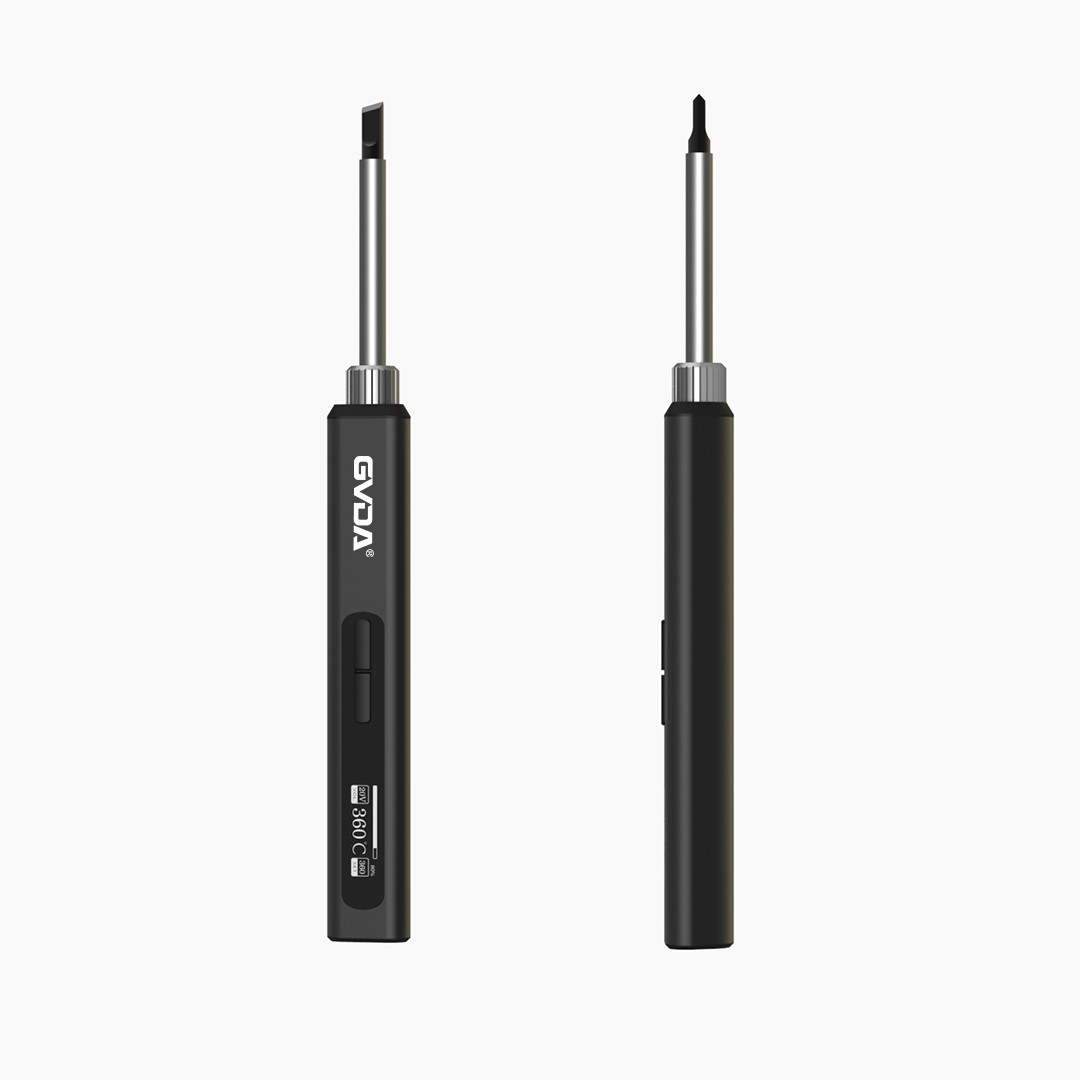
Mastering the welding technology of electric soldering iron
The welding technology mentioned here refers to the fusion between metal conductors and solder commonly used in electronic circuit manufacturing. Solder is a lead-tin alloy with a melting point of approximately 183 degrees. Solder on the market is often made into strips or filaments, and some solder also contains rosin, making it more convenient to use.
1. Method of holding an electric soldering iron
There are usually two methods for holding an electric soldering iron: pen grip and fist grip.
(1) Gripping technique. Suitable for lightweight soldering irons such as 30W internal heating. Its soldering iron head is straight, and the head end is filed into an inclined or conical shape, suitable for welding small solder pads.
(2) Fist grip technique. Suitable for high-power soldering irons, we generally do not use high-power soldering irons in electronic manufacturing (not introduced here).
2. Several methods for soldering leads on printed circuit boards.
Printed circuit boards are divided into two types: single sided and double-sided. The through holes on it are generally non-metallic, but in order to make the components welded to the circuit board more secure and reliable, most of the through holes on printed circuit boards in electronic products are now metallized. The method of welding leads onto a regular single panel:
(1) Straight shear head. The lead wire directly passes through the through-hole, and during welding, an appropriate amount of molten solder is evenly surrounded above the solder pad to form a conical shape. After it cools and solidifies, the excess lead wire is cut off. (Specific methods can be found on the blackboard)
(2) Directly bury your head. The lead through the through hole only exposes an appropriate length, and the melted solder buries the lead head inside the solder joint. This type of solder joint is similar to a hemispherical shape, and although it is beautiful, special attention should be paid to preventing false soldering.
3. Prevention of poor welding
Welding technology is a basic skill that radio enthusiasts must master, and requires more practice to become proficient.
1. Choosing appropriate soldering wire should use low melting spot welding wire for welding electronic components.
2. Flux, dissolve 25% rosin in 75% alcohol by weight as the flux.
3. Before using an electric soldering iron, tin should be applied. The specific method is to heat the soldering iron, and when it can just melt the soldering tin, apply flux, and then evenly apply the soldering tin to the soldering iron head, so that the soldering iron head can eat a layer of tin evenly.
4. Welding method: Polish the pads and pins of the components with fine sandpaper and apply soldering flux. Dip an appropriate amount of solder with a soldering iron tip, touch the solder joint, and wait for all the solder on the solder joint to melt and immerse the component lead head. Gently lift the soldering iron tip up along the component pin to leave the solder joint.
5. The welding time should not be too long, otherwise it is easy to burn the components. If necessary, tweezers can be used to clamp the pins to help dissipate heat.
6. The solder joint should have a sinusoidal peak shape, and the surface should be bright and smooth, with Wuxi burrs and moderate tin content.
7. After welding, the residual soldering flux on the circuit board should be cleaned with alcohol to prevent the carbonized flux from affecting the normal operation of the circuit.
8. The integrated circuit should be soldered last, and the soldering iron should be reliably grounded or welded using residual heat after power outage. Alternatively, use a dedicated socket for integrated circuits and solder the socket before plugging the integrated circuit in.
9. The electric soldering iron should be placed on the soldering iron holder.