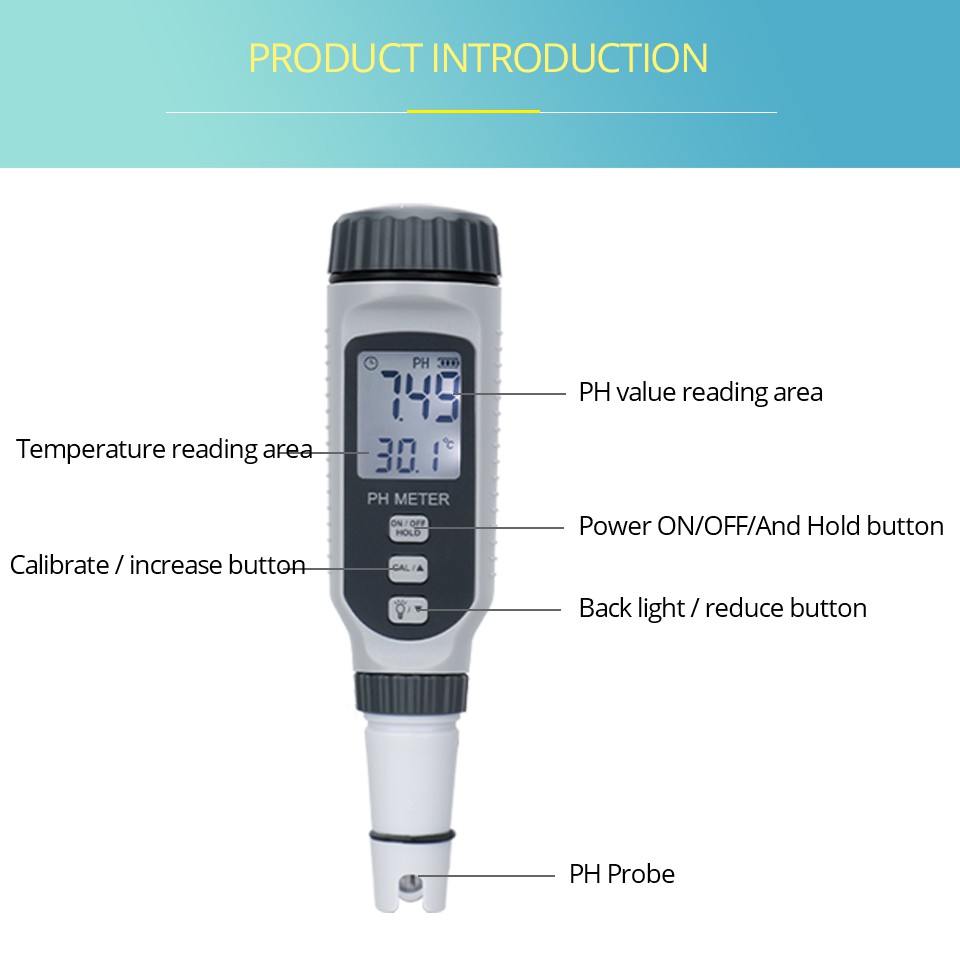
Matters Needing Attention During pH Meter Measurement
Before performing the operation, the integrity of the electrodes should be checked first. At present, most of the electrodes used in pH meters are composite electrodes, while the older generation of pH meters still uses glass electrodes and calomel electrodes. Due to the widespread use of composite electrodes, the following mainly discusses composite electrodes.
At present, there are mainly two types of composite electrodes used in laboratories: fully enclosed and non enclosed. Fully enclosed electrodes are relatively rare and mainly produced by foreign enterprises. Before using the composite electrode, first check whether there are cracks or breakage in the glass bulb. If not, perform two-point calibration with pH buffer solution. When the positioning and slope buttons can be adjusted to the corresponding pH value, it is generally considered to be usable. Otherwise, follow the instructions for electrode activation treatment. The activation method is to soak in a 4% hydrogen fluoride solution for about 3-5 seconds, then take it out and rinse it with distilled water. After soaking it in a 0.1mol/L hydrochloric acid solution for several hours, rinse it clean with distilled water, and then calibrate it. That is, use a buffer solution with a pH value of 6.86 (25 ℃) for positioning. After adjustment, choose another pH buffer solution for slope adjustment. If it cannot be adjusted, replace the electrode. For non enclosed composite electrodes, an external reference solution of 3mol/L potassium chloride solution needs to be added inside. Therefore, it is necessary to check whether the potassium chloride solution in the electrode is more than 1/3. If it is not, 3mol/L potassium chloride solution needs to be added. If the potassium chloride solution exceeds the position of the small hole, discard the excess potassium chloride solution and place it below the small hole. Check for any bubbles in the solution, and if there are bubbles, gently tap the electrode to completely remove them.
During use, the rubber on the electrode should be peeled off to expose the small holes. Otherwise, negative pressure will be generated during analysis, which will prevent the potassium chloride solution from smoothly exchanging ions with the measured solution through the glass bulb, resulting in inaccurate measurement data. After the measurement is completed, the rubber should be restored and the small hole should be sealed. After cleaning with distilled water, the electrode should be soaked in a 3mol/L potassium chloride solution to keep the electrode bulb moist. If the protective solution is found to have been lost before use, the electrode should be soaked in a 3mol/L potassium chloride solution for several hours to achieve the best measurement state. In practical use, it has been found that some analysts treat composite electrodes as glass electrodes and soak them in distilled water for a long time, which is incorrect. This will greatly reduce the concentration of potassium chloride solution in the composite electrode, resulting in insensitive electrode response during measurement and ultimately inaccurate measurement data. Therefore, composite electrodes should not be soaked in distilled water for a long time.