pH Meter Installation and Maintenance
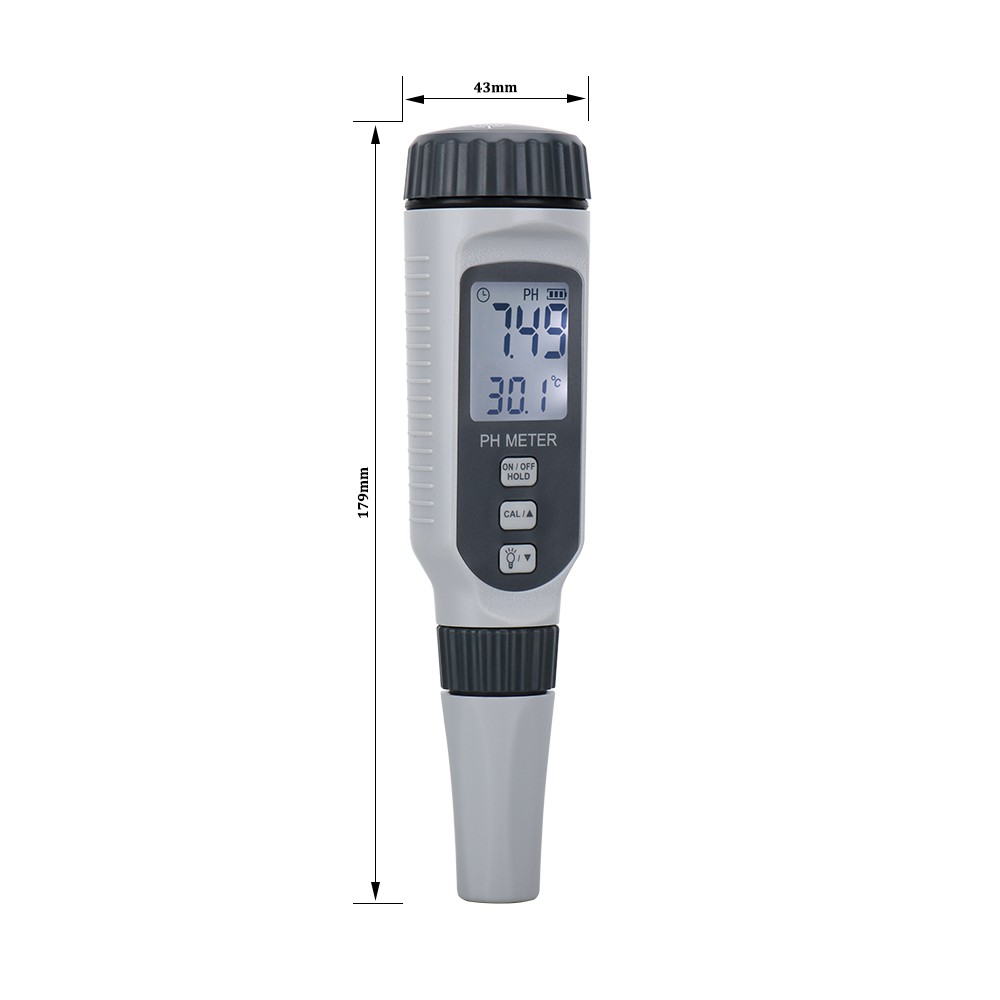
There are two installation methods for pH meters: flow-through and immersion. Generally, immersion installation is used in sewage treatment plants. For example, the pH meter of the sewage treatment plant is installed in the overflow tank at the outlet of the sedimentation tank, where the pH value is representative and the water flow is stable, without causing significant impact on the pH meter.
Regular maintenance helps to accurately measure instruments and extend their service life. It should be noted that the dedicated cable between the sensor and the transmitter should not be damp, otherwise the high resistance and low voltage signals of the electrode will not be transmitted to the transmitter. If the electrode is not being measured, a yellow protective sleeve should be placed on it, which can keep the electrode in a moist state and prolong its service life. Every month or so, the electrodes should be cleaned. First, spray the attached material with a gentle water flow, then soak the electrodes in the cleaning solution for a period of time, and finally rinse with clean water. The sensor bracket should also be cleaned. After each cleaning, a buffer solution should be used for calibration. Currently, among the domestically produced pH calibration solutions, pH 4 is still acceptable, while pH 7 is not accurate enough and will affect the calibration results. So it's good to use the manufacturer's calibration solution. The manufacturer usually provides two bottles of standard solution, one with a pH value of 7, for calibrating the zero point of the instrument; A bottle with a pH value of 4 is used to calibrate the signal output slope of the instrument.