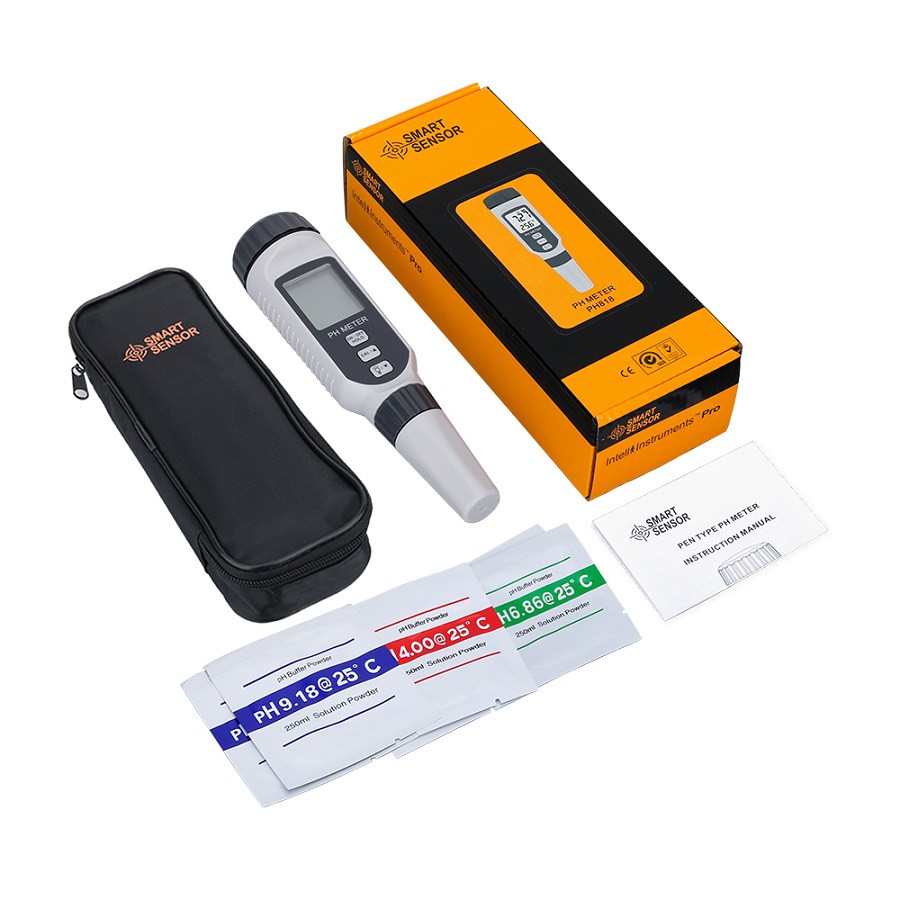
Why Must pH Electrodes Be Soaked Before Use?
The PH electrode must be soaked before use, because the PH bulb is a special glass membrane. There is a thin layer of hydrated gel on the surface of the glass membrane. It can form a stable H+layer on the membrane surface only after full immersion, and can have a stable and good response to the H+in the solution. If the immersion is not sufficient, the response value during measurement will be unstable and drift. The soaking time is generally more than 24 hours.
For pH single glass electrodes, they can be soaked in distilled water or 3.0N KCL solution, while single reference electrodes can only be soaked in 3.0N KCL solution. For pH composite electrodes, desalinated water, distilled water, or a 3.0N solution can be used. If immersed for a long time, a 3.0N KCL solution must be used. Previously, when using PH single glass electrodes, people were accustomed to soaking them in deionized water. However, if using PH composite electrodes and still soaking them in deionized water for a long time, this incorrect soaking method will turn a well performing PH electrode into one with slow response and poor accuracy. Moreover, the longer the soaking time, the worse the performance, because after a long soaking time, the KCL concentration of the electrode reference system will be greatly reduced, and the liquid junction potential will increase and become unstable.
How to check the quality of a pH meter?
Generally, the quality of electrodes is judged by the slope of the electrode, which can also be supplemented by the zero position mV value of the electrode.
For industrial electrodes, the factory standard is a slope of 95% -105%. Zero potential: ± 15mV. Zero potential is a range within which all electrodes are good, rather than the 8.2mV limit given by some instrument manufacturers, which limits the electrode zero potential to around 8.2mV. After using for a period of time, the zero potential will change, and within ± 60 mV, it is permissible to have no deviation. But the slope should not be less than 70%, and if some * * is required, it should not be less than 80%.