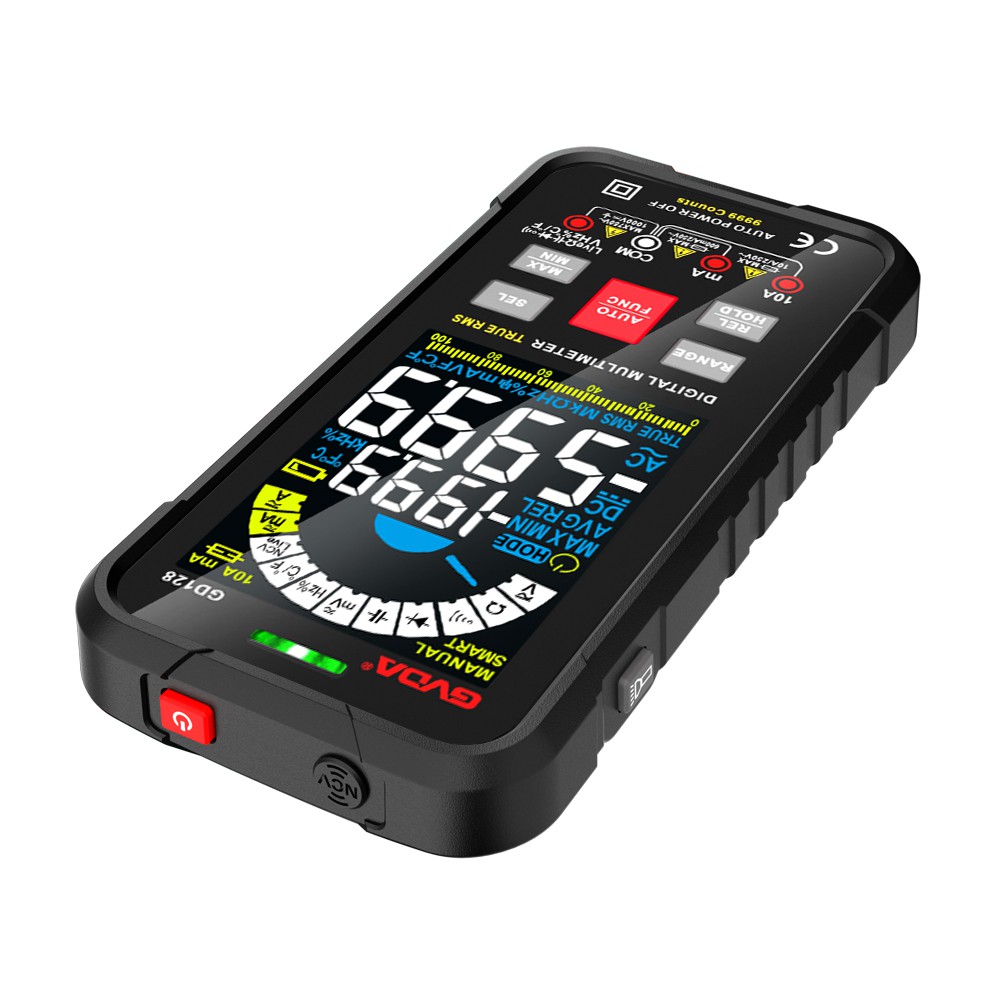
Measurement methods and AC frequency response of multimeter
The digital multimeter can not only measure DC voltage (DCV), AC voltage (ACV), DC current (DCA), AC current (ACA), resistance (Ω), diode forward voltage drop (VF), transistor emitter current amplification factor (hrg), but also measure capacitance (C), conductance (ns), temperature (T), frequency (f), and has added buzzer mode (BZ) and low-power method resistance mode (L0 Ω) for checking circuit continuity. Some instruments also have the functions of inductance mode, signal mode, AC/DC automatic conversion, and capacitance mode automatic range conversion.
Generally speaking, the measurement method of a multimeter is mainly for measuring AC signals. As we all know, there are many types and complex situations of AC signals, and with the change of AC signal frequency, various frequency responses occur, which affect the measurement of the multimeter. There are generally two methods for measuring AC signals with a multimeter: average value and true effective value measurement. The average measurement is generally used for pure sine waves, which uses the method of estimating the average to measure AC signals, while there will be significant errors for non sine wave signals.
At the same time, if harmonic interference occurs in sine wave signals, the measurement error will also change significantly. True RMS measurement uses the instantaneous peak value of the waveform multiplied by 0.707 to calculate current and voltage, ensuring accurate readings in distorted and noisy systems. In this way, if you need to detect ordinary digital data signals, measuring with an average multimeter will not achieve the true measurement effect. The frequency response of the communication signal is also crucial, and some can reach up to 100KHz.
The Development Trend of Digital Multimeters
Integration: The handheld digital multimeter adopts a single-chip A/D converter, and the peripheral circuit is relatively simple, requiring only a small number of auxiliary chips and components. With the continuous emergence of dedicated chips for single-chip digital multimeters, a single IC can be used to construct a fully functional automatic range digital multimeter, creating favorable conditions for simplifying design and reducing costs.
Low power consumption: New digital multimeters commonly use A/D converters with CMOS large-scale integrated circuits, resulting in very low overall power consumption.