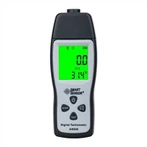
Method for judging the leakage position of low voltage line by clamp ammeter
In the case of low-voltage power transmission, a clamp ammeter can also be used to determine the location of low-voltage line leakage at the connection line of low-voltage users within the suspected range.
During testing, the phase and neutral wires of single-phase electricity users should be placed in the clamp of the clamp meter at the same time, and the three phase and neutral wires of three-phase electricity users should also be placed in the clamp at the same time.
(1) If there is no leakage fault in the circuit, the phasor sum of the load current flux is zero, and the clamp meter reading is also zero;
(2) If there is leakage current in the circuit, a clamp ammeter can detect the leakage current.
When searching for leakage faults, safety must be taken into account, and someone must be present to supervise and take appropriate safety measures. When reading data from the clamp table, it is important to maintain a safe distance between the human body and live parts.
Precautions before and after measuring with a clamp ammeter
A clamp ammeter is different from a regular ammeter in that it consists of a current and an ammeter. Load current can be measured without disconnecting the circuit. But only for use when the voltage of the tested line does not exceed 500V. How to correctly use a clamp ammeter, I would like to share some opinions for colleagues' reference.
1. Before measurement, it is necessary to check whether the rubber insulation of the clamp iron core is intact and undamaged. The jaws should be clean, rust free, and have no obvious gaps when closed.
2. Before measurement, the magnitude of the measured current should be estimated and an appropriate range should be selected. If it is impossible to estimate, you can first choose a larger range and then gradually reduce it to the appropriate gear. Adjusting the range gear must be done with the jaws open to prevent damage to the instrument caused by current shock.
3. When measuring, the tested wire should be placed in the middle of the clamp as much as possible. If there is any noise on the joint surface of the clamp, it should be opened and closed again. If there is still noise, the joint surface should be treated to ensure accurate reading. Additionally, it is not allowed to clamp two wires simultaneously with an ammeter.
4. When measuring currents below 5 amps, if more accurate readings are required, if conditions permit, the wire can be wound a few more times and placed in the clamp. At this point, the actual current value is the instrument reading divided by the number of wires placed in the clamp.
5. After the measurement is completed, the switch for adjusting the current range should be placed in the high position to avoid damage to the instrument due to measuring without selecting the range in the next use.