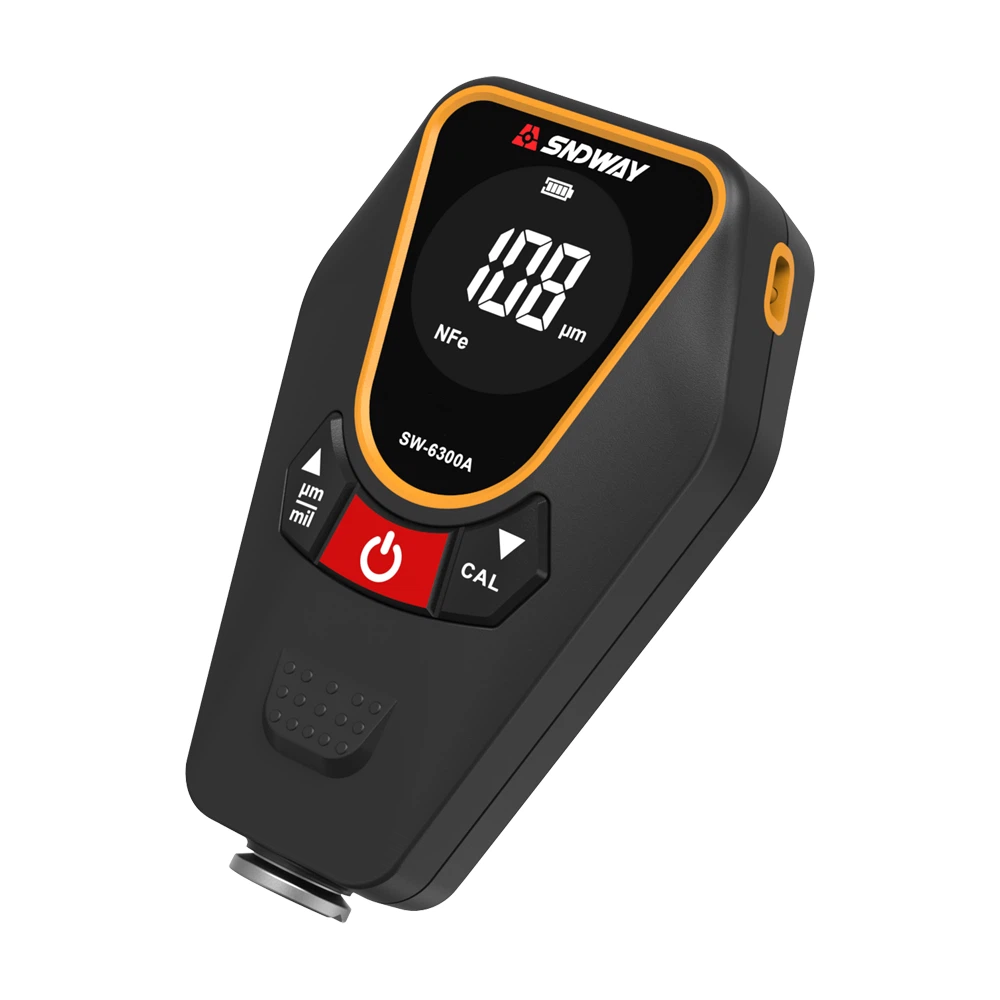
Method of non-destructive testing and gauge of coating thickness
Non-destructive testing method and principle of coating thickness gauge: Coating thickness gauge is a promising subject that is comprehensive in theory and attaches great importance to practical links in actual measurement. It involves many aspects such as physical properties of materials, product design, manufacturing process, fracture mechanics and finite element calculation.
In the chemical industry, electronics, electric power, metal and other industries, in order to achieve the protection or decoration of various materials, methods such as spraying non-ferrous metal coverage, phosphating, and anodic oxidation treatment are usually used, so that coatings, platings, coatings, etc. appear. Layers, laminates or chemically generated films, we call them "cladding".
The thickness measurement of the cladding has become the most important process necessary for users in the metal processing industry to inspect the quality of finished products. It is an essential means for products to meet safety standards. At present, the thickness of the coating has been generally measured according to the unified international standard at home and abroad. The selection of methods and instruments for the non-destructive testing of the coating becomes more and more important with the gradual progress in the research on the physical properties of materials.
The non-destructive testing methods for coating mainly include: wedge cutting method, optical section method, electrolysis method, thickness difference measurement method, weighing method, X-ray fluorescence method, β-ray reflection method, capacitance method, magnetic measurement method and eddy current measurement law etc. Except for the last five methods, most of these methods will damage the product or the surface of the product. They are destructive testing, and the measurement methods are cumbersome and slow, and they are mostly suitable for sampling inspection.
X-ray and β-ray reflectometry can be used for non-contact and non-destructive measurement, but the device is complicated and expensive, and the measurement range is small. Because of the radioactive source, the user must abide by the radiation protection regulations, and it is generally used to measure the thickness of each layer of metal coating.
The capacitance method is generally only applied to the thickness test of the insulating coating of very thin conductors.
Magnetic measurement method and eddy current measurement method, with the increasing progress of technology, especially after the introduction of microprocessor technology in recent years, the thickness gauge has taken a big step towards miniature, intelligent, multi-functional, high-precision and practical aspects. The measurement resolution has reached 0.1μm, and the accuracy can reach 1%. It also has the characteristics of wide application range, wide measuring range, easy operation and low price. It is the most widely used instrument in industry and scientific research.
The non-destructive testing method is used to measure the thickness without damaging the coating or the substrate, and the testing speed is fast, so a large amount of testing work can be carried out economically. Several conventional thickness measurement methods are introduced below.
1. The principle of magnetic attraction thickness gauge
The thickness of the cladding can be measured by using the attraction force between the magnet probe and the magnetic steel material in a certain proportion to the distance between the two. This distance is the thickness of the cladding, so as long as the magnetic permeability of the cladding and the base material The difference is large enough to be measured. In view of the fact that most industrial products are stamped and formed by structural steel and hot-rolled cold-rolled steel plates, magnetic thickness gauges are the most widely used. The basic structure of the measuring instrument is magnetic steel, tension spring, scale and self-stop mechanism. When the magnetic steel is attracted to the object under test, a spring will gradually elongate thereafter, and the tension will gradually increase. When the tension steel is greater than the suction force and the magnetic steel is separated, record the magnitude of the pull force to obtain the coating thickness. Generally speaking, different models have different measuring ranges and suitable occasions. In an angle of about 350o, the scale can be used to indicate the coating thickness of 0~100μm; 0~1000μm; 0~5mm, etc., and the accuracy can reach more than 5%, which can meet the general requirements of industrial applications. This instrument is characterized by simple operation, strong durability, no need for power supply and calibration before measurement, and low price, which is very suitable for on-site quality control in workshops.
2. Magnetic induction principle thickness gauge
The principle of magnetic induction is to use the magnetic flux flowing into the iron substrate through the non-ferromagnetic coating to measure the thickness of the coating. The thicker the coating, the smaller the magnetic flux. Because it is an electronic instrument, it is easy to calibrate, and can realize multiple functions, expand the measuring range, and improve the accuracy. Since the test conditions can be reduced a lot, it has a wider application field than the magnetic suction type.
When the probe with the coil around the soft iron core is placed on the object to be tested, the instrument will automatically output the test current, the magnitude of the magnetic flux will affect the magnitude of the induced electromotive force, and the instrument will amplify the signal to indicate the coating thickness. The early products were indicated by the meter head, and the accuracy and repeatability were not good. Later, the digital display type was developed, and the circuit design was becoming more and more perfect. In recent years, the latest technologies such as microprocessor technology, electronic switch, and frequency stabilization have been introduced, and a variety of products have come out one after another. The accuracy has been greatly improved, reaching 1%, and the resolution has reached 0.1μm. Mild steel is used as the magnetic core, and the frequency of the coil current is not high to reduce the influence of the eddy current effect. The probe has a temperature compensation function. Since the instrument is intelligent, it can identify different probes, cooperate with different software and automatically change the current and frequency of the probe. One instrument can be used with multiple probes, or the same instrument can be used. It can be said that instruments suitable for industrial production and scientific research have reached a very practical stage.