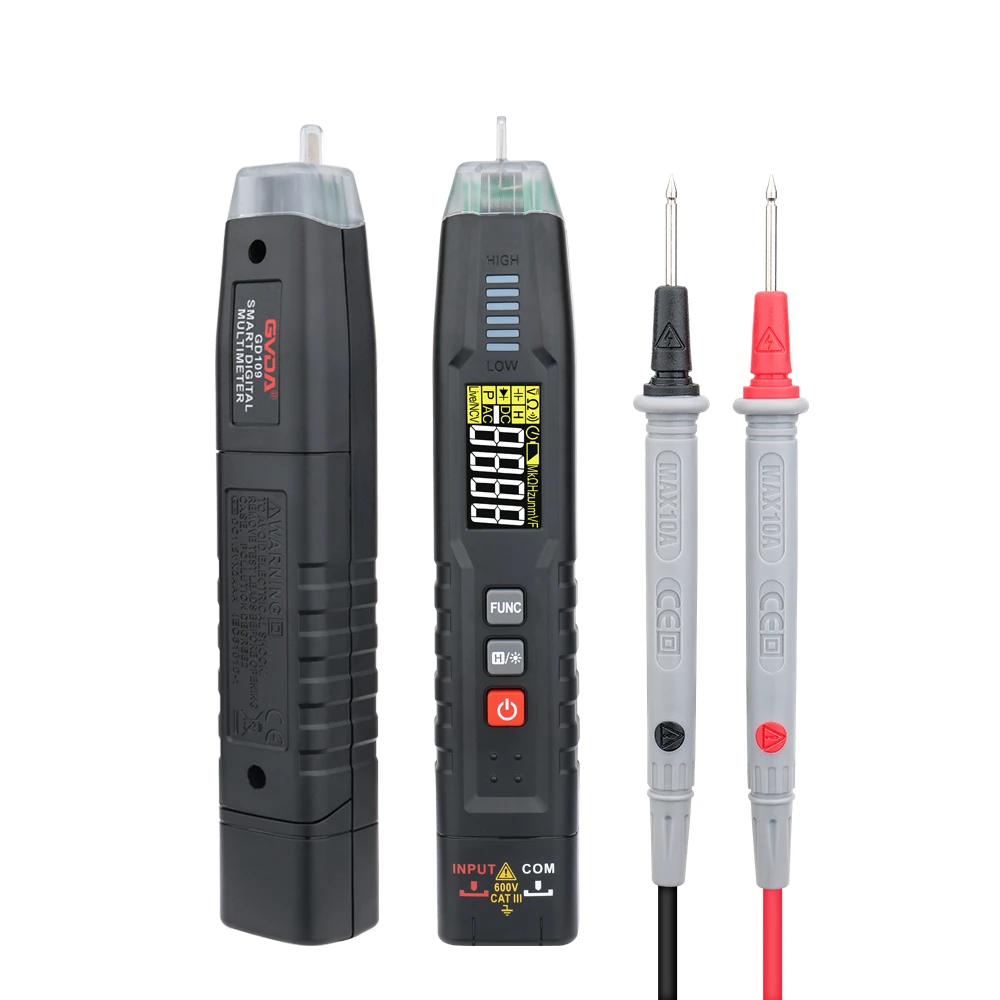
Methods of Use and Precautions for Digital Multimeters
Digital measuring instruments have become mainstream nowadays and tend to replace analog instruments. Compared with analog instruments, digital instruments feature high sensitivity, high accuracy, clear display, strong overload resistance, easy portability and simpler operation. This article briefly introduces their operating methods and precautions.
Digital multimeters boast advantages such as convenient reading acquisition and complete functions, so they are widely popular among radio enthusiasts. Ordinary digital multimeters generally support resistance measurement, continuity beep test, forward voltage measurement of diodes, AC and DC voltage and current measurement, as well as measurement of transistor amplification factor and performance. Some digital multimeters are equipped with additional functions including capacitance measurement, frequency measurement, temperature measurement, data storage and voice readout, which bring great convenience to practical testing work. However, improper use may easily damage internal components and cause faults during measurement. Based on actual cases of digital multimeter damage, the precautions during operation are summarized for beginners to refer to, so as to prevent damage to the instrument as much as possible.
Most digital multimeter damages are caused by incorrect range selection. For example, selecting the resistance range when measuring AC mains voltage. Once the test probes touch the mains supply under this condition, the internal components of the multimeter will be damaged instantly. Therefore, always check whether the measuring range is correct before measurement. After use, set the selector switch to AC 750 V or DC 1000 V. In this way, accidental measurement of other parameters will not damage the digital multimeter next time.
Some damages occur when the measured voltage or current exceeds the measuring range. For instance, measuring mains voltage under the AC 20 V range can easily damage the AC amplifier circuit and disable the AC measurement function of the multimeter. Excessive DC input voltage will also lead to internal circuit faults. When measuring current, an over-range current will usually only blow the internal fuse without causing other damages. Therefore, if the approximate voltage value is unknown, start with the highest range, then switch to a lower range after obtaining a rough reading for more accurate results. If the voltage to be measured far exceeds the maximum range of the multimeter, high-resistance test probes should be used separately, such as for measuring the CRT anode high voltage and focus high voltage of black-and-white and color televisions.