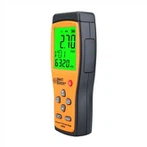
multimeter
The basic principle of the multimeter is to use a sensitive magnetoelectric DC ammeter (microammeter) as the head. When a tiny current passes through the meter, there will be a current indication. However, the meter head cannot pass a large current, so some resistors must be connected in parallel or in series on the meter head for shunt or step-down, so as to measure the current, voltage and resistance in the circuit.
The measurement process of the digital multimeter is converted into a DC voltage signal by the conversion circuit, and then the analog/digital (A/D) converter converts the voltage analog quantity into a digital quantity, and then counts through an electronic counter, and finally uses the measurement result. The numbers are shown directly on the display.
The function of measuring voltage, current and resistance of the multimeter is realized by the conversion circuit part, and the measurement of current and resistance is based on the measurement of voltage, that is to say, the digital multimeter is extended on the basis of the digital DC voltmeter.
The digital DC voltmeter A/D converter converts the analog voltage that changes continuously with time into a digital quantity, and then counts the digital quantity by an electronic counter to obtain the measurement result, and then the decoding display circuit displays the measurement result. The logic control circuit controls the coordinated work of the circuit, and completes the entire measurement process in sequence under the action of the clock.