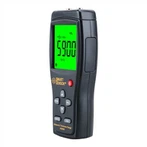
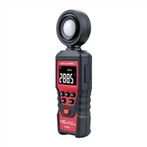
Multimeter Fault Detection Method
1. Feeling method
By relying on sensory perception to directly determine the cause of the fault, through visual inspection, it can be found that there are issues such as broken wires, desoldering, short circuits in the grounding, broken fuse tubes, burnt components, mechanical damage, copper foil warping and breakage on the printed circuit, etc; You can touch the temperature rise of the battery, resistor, transistor, and integrated block, and refer to the circuit diagram to find the cause of the abnormal temperature rise. In addition, you can also check by hand whether the components are loose, whether the integrated circuit pins are firmly inserted, and whether the conversion switch is stuck; You can hear and smell any unusual sounds or odors.
2. Voltage measurement method
Measuring the working voltage of each key point can quickly identify the fault point. Measure the operating voltage, reference voltage, etc. of the A/D converter.
3. Short circuit method
The short-circuit method is generally used in the inspection of A/D converters mentioned earlier, which is more commonly used in repairing weak and micro electrical instruments.
4. Circuit breaking method
Disconnect the suspicious part from the entire machine or unit circuit. If the fault disappears, it indicates that the fault is in the disconnected circuit. This method is mainly suitable for situations where there is a short circuit in the circuit.
5. Measurement element method
When the fault has narrowed down to one or several components, it can be measured online or offline. If necessary, replace with good components. If the fault disappears, it indicates that the component is broken.
6. Interference method
Using human induced voltage as an interference signal to observe the changes in LCD display, it is commonly used to check whether the input circuit and display part are intact.