Multimeter fault detection steps and precautions
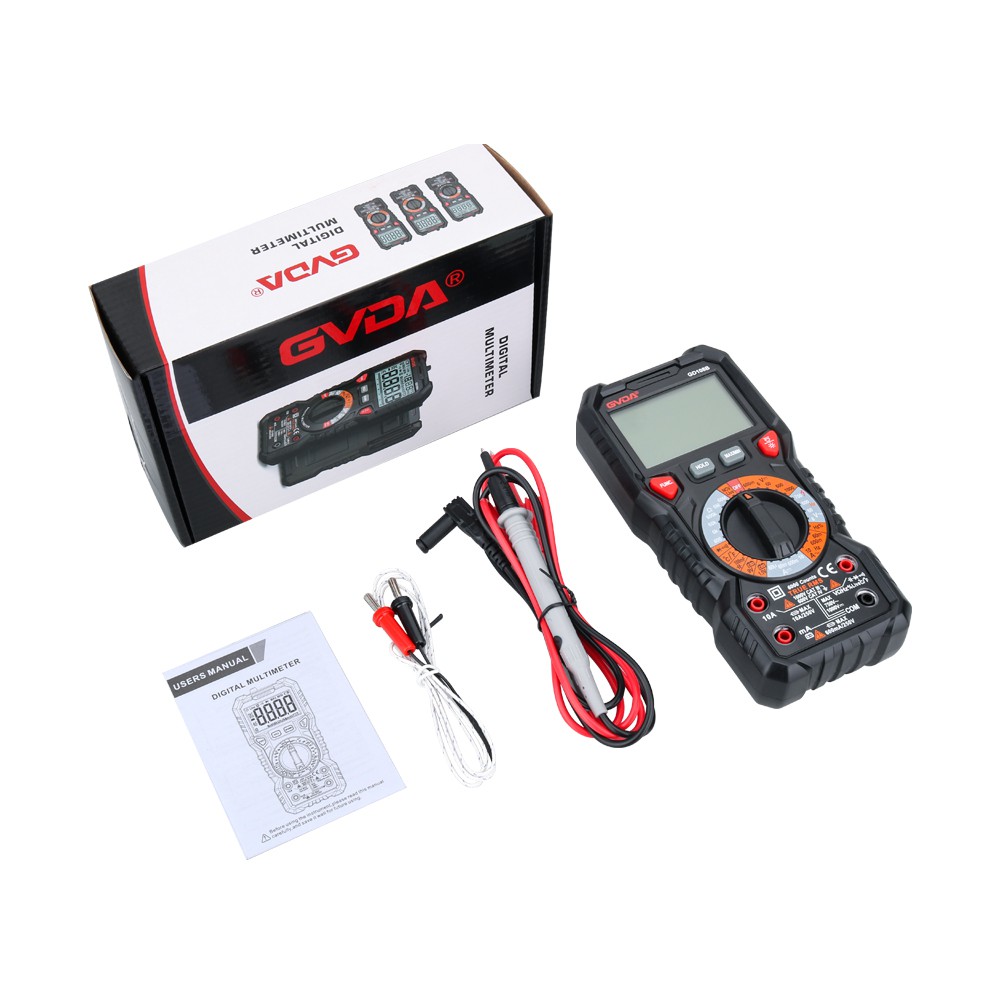
The multimeter is composed of three main parts: meter head, measuring circuit and changeover switch.
(1) Meter head: It is a high-sensitivity magnetoelectric DC ammeter. The main performance indicators of the multimeter basically depend on the performance of the meter head. The sensitivity of the meter head refers to the DC current value flowing through the meter head when the pointer of the meter head is deflected at full scale. The smaller the value, the higher the sensitivity of the meter head. The greater the internal resistance when measuring voltage, the better its performance. There are four scale lines on the meter head, and their functions are as follows: The first line (from top to bottom) is marked with R or Ω, which indicates the resistance value. When the switch is in the ohm block, read this scale line. The second bar is marked with ∽ and VA, indicating the AC, DC voltage and DC current value. When the transfer switch is in AC, DC voltage or DC current gear, and the range is in other positions except AC 10V, read this scale Wire. The third line is marked with 10V, indicating the AC voltage value of 10V. When the switch is in the AC and DC voltage range and the range is at AC 10V, read this scale line. The fourth bar, labeled dB, indicates the audio level.
(2) Measurement line
The measurement circuit is a circuit used to convert various measured objects into a small DC current suitable for meter measurement. It consists of resistors, semiconductor components and batteries.
It can convert various measured objects (such as current, voltage, resistance, etc.) and different ranges into a certain amount of tiny DC current through a series of processing (such as rectification, shunting, voltage division, etc.) gauge to measure.
(3) Transfer switch
Its function is to select a variety of different measurement lines to meet the measurement requirements of different types and ranges. There are generally two transfer switches, marked with different gears and ranges.
Multimeter fault detection steps
(1) The range of the meter under test is turned to the lowest level of DC voltage;
(2) Measure whether the working voltage of the A/D converter is normal. According to the A/D converter model used in the table, corresponding to V+ pin and COM pin, whether the measured value is consistent with its typical value.
(3) Measure the reference voltage of the A/D converter. The reference voltage of the commonly used digital multimeter is generally 100mV or 1V, that is, measure the DC voltage between VREF+ and COM. If it deviates from 100mV or 1V, you can use an external potentiometer Make adjustments.
(4) Check the display number whose input is zero, short-circuit the positive terminal IN+ and the negative terminal IN- of the A/D converter to make the input voltage Vin=0, and the meter displays "00.0" or "00.00".
(5) Check the full brightness strokes of the display. Short the test terminal TEST pin and the positive power supply terminal V+, make the logic ground become high potential, and all digital circuits stop working. Because DC voltage is added to each stroke, all the strokes are bright and the alignment table shows "1888", and the alignment table shows "18888". If there is a lack of strokes, check whether there is any poor contact or disconnection between the corresponding output pin of the A/D converter and the conductive glue (or connection), and the display.
Precautions for multimeter measurement
(1) Disconnect the power supply before measurement to avoid damage to the meter and components during the test.
(2) The internal voltage of the electric block of the multimeter shall not be greater than 6v, and the measuring range shall be set by r×100 or r×1k.
(3) When measuring the IC pin parameters, attention should be paid to the measurement conditions, such as the model to be tested, the position of the sliding arm of the potentiometer related to the IC, etc., and the quality of the peripheral circuit components should also be considered.